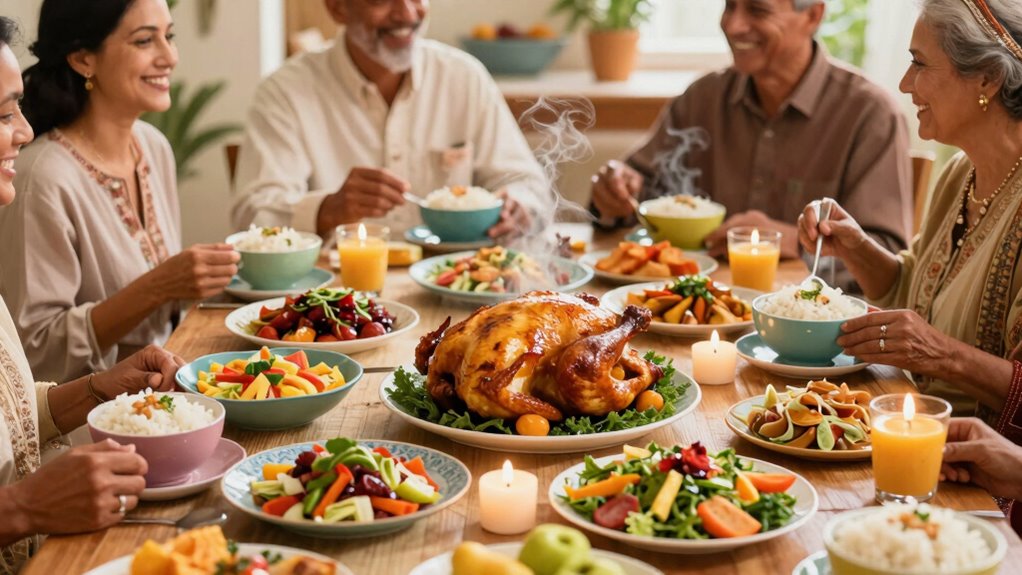

Celebration meals help you connect with your culture by embodying traditions, symbols, and rituals that unite communities. They go beyond just food—each dish symbolizes stories, history, and values passed down through generations. Preparing and sharing these foods strengthen bonds and preserve your cultural identity. Whether through special ingredients or specific customs, these meals act as living symbols of unity, hope, and continuity. If you keep exploring, you’ll discover even more about how food keeps traditions alive.
Key Takeaways
- Celebration meals reinforce cultural identity and pass down traditions through symbolic ingredients and preparation methods.
- Rituals during festive eating foster a sense of community, respect, and shared history.
- Specific foods serve as symbols representing prosperity, unity, and renewal during holidays.
- Food symbols and rituals deepen cultural connections and preserve heritage across generations.
- Sharing and preparing traditional dishes maintain continuity and strengthen collective bonds.
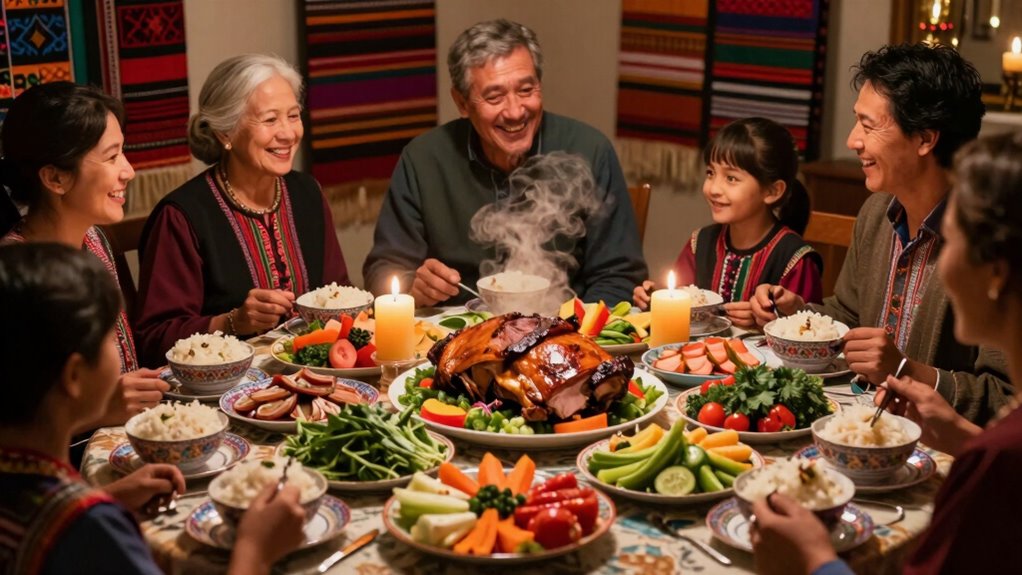
Food plays a central role in celebration meals because it brings people together and reinforces cultural traditions. When you gather around a table for a special occasion, the dishes served often carry deep cultural symbolism that goes beyond their taste. These foods are more than nourishment; they embody stories, histories, and values passed down through generations. For example, certain ingredients or preparation methods might symbolize prosperity, health, or unity within a community. By sharing these symbolic foods, you participate in a collective identity, strengthening bonds and honoring ancestors’ legacies.
Celebration foods symbolize shared history, unity, and traditions that strengthen community bonds across generations.
Moreover, celebration meals are steeped in ritual significance. The act of preparing and consuming specific foods during special events isn’t random; it follows traditions that give the occasion a sacred or meaningful dimension. These rituals might involve specific prayers, gestures, or sequences that highlight the importance of the moment. When you partake in these rituals, you connect with a shared past and reinforce the cultural fabric that binds everyone together. For instance, breaking bread during a religious holiday or offering a toast with traditional drinks often signifies more than just eating or drinking — it signifies respect, gratitude, and communal harmony.
You may notice that during holidays or festivals, certain dishes become unavoidable symbols of the celebration. These foods are carefully chosen because they carry ritual significance, marking the *shift* from ordinary days to special ones. The preparation of these dishes can be a communal activity, where generations pass down recipes and techniques, embedding cultural symbolism into each step. When you participate in these culinary rituals, you’re not just making food; you’re actively preserving a tradition that keeps your cultural identity alive.
In addition, the symbolism embedded in celebration foods often reflects the values and beliefs of the community. For example, a round cake might symbolize completeness and unity, while a specific color or ingredient can represent hope or renewal. These symbols serve as visual or sensory cues that deepen your connection to the occasion. They remind you that celebration is more than a feast—it’s a meaningful act rooted in history and shared purpose.
Ultimately, celebration meals serve as a bridge between the past and the present, where food’s cultural symbolism and ritual significance help you and your community maintain a sense of continuity. They transform ordinary ingredients into powerful symbols that honor tradition, foster unity, and create lasting memories.

CAROTE 19pcs Pots and Pans Non Stick, Cookware Sets Detachable Handle, Induction Kitchen Pots and Pans,NonStick Cooking Set, Oven/Dishwasher/Fridge Safe, Space Saving
Optimal storage and easy stacking with the handles off saves up to 70% more space of Carote detachable…
As an affiliate, we earn on qualifying purchases.
As an affiliate, we earn on qualifying purchases.
Frequently Asked Questions
How Do Celebration Meals Vary Across Different Cultures?
You’ll notice celebration meals vary widely across cultures, reflecting unique traditions and values. You might enjoy festive beverages like sake during Japanese New Year or mulled wine at European winter festivals. Culinary symbolism is also key—for example, eating lentils in Italy for prosperity or mooncakes in China for unity. These dishes and drinks deepen the cultural significance of celebrations, making each meal a meaningful expression of heritage and shared joy.
What Role Do Specific Dishes Play in Traditional Ceremonies?
You recognize that specific dishes serve as powerful symbols in traditional ceremonies, embodying cultural symbolism and culinary artistry. These dishes honor ancestors, mark milestones, and strengthen community bonds. Their preparation and presentation reflect deep-rooted values, history, and identity. By engaging in these culinary rituals, you preserve cultural heritage, foster unity, and celebrate collective identity—transforming food from mere sustenance into meaningful expressions of tradition and shared history.
How Has Modern Cuisine Influenced Traditional Celebration Foods?
Modern cuisine has profoundly influenced traditional celebration foods by introducing fusion cuisine, blending flavors and techniques from different cultures. You might find traditional dishes adapted with new ingredients or cooking styles, making them more inclusive through dietary adaptations. This evolution allows you to enjoy familiar flavors while embracing contemporary tastes, helping traditions stay relevant and accessible for everyone. It’s a way to honor heritage while innovating for modern preferences.
Are There Health Considerations in Traditional Celebration Meals?
You should know that traditional celebration meals often raise health considerations, especially around nutritional balance and dietary restrictions. While they’re rich in cultural significance, they can be high in fats, sugars, or salt. It’s wise to find a balance—perhaps by adjusting recipes or portion sizes—so you honor your traditions without compromising health. After all, you can celebrate without overdoing it, keeping your well-being front and center.
How Do Families Personalize Celebration Dishes Over Generations?
You personalize celebration dishes over generations by adapting family recipes to reflect your family’s unique tastes and stories. You might add new ingredients or cooking techniques, keeping culinary storytelling alive. Sharing these modifications helps preserve traditions while making the dishes meaningful for current generations. Through these personal touches, you keep family recipes vibrant, creating a sense of continuity and connection that celebrates your family’s history with every special meal.

Vesici 4 Pack World Flag Serving Trays 13×10 Melamine Platters for Around the World Party Decorations, Rectangular International Map Dishes for Multicultural Global Theme Appetizers, Missionary Events
Two Unique International Designs: This 4-pack includes two world flags serving platter styles: one with a central map…
As an affiliate, we earn on qualifying purchases.
As an affiliate, we earn on qualifying purchases.
Conclusion
Food isn’t just fuel; it’s the heartbeat of traditions, weaving stories and memories into every bite. When you gather around a celebration meal, you’re sharing more than flavors—you’re passing down history, love, and identity. Just like a melody that lingers long after the song ends, these dishes stay with you, echoing the importance of food in keeping traditions alive. Embrace these moments, for they’re the true spices of life’s greatest celebrations.

Golden Egg Maker – Manual Mixing Puller Device, Portable Baking Whisking Gadget, No Shell Rotation Cooker Accessory | Breakfast Preparation Tool For Home Parties Camping And Festive Events
Smooth And Swift Mixing : The Egg Yolk Mixer supports effortless one-handed use, making it ideal for whipping…
As an affiliate, we earn on qualifying purchases.
As an affiliate, we earn on qualifying purchases.

New Orleans Classic Seafood (Classic Recipes Series)
Used Book in Good Condition
As an affiliate, we earn on qualifying purchases.
As an affiliate, we earn on qualifying purchases.