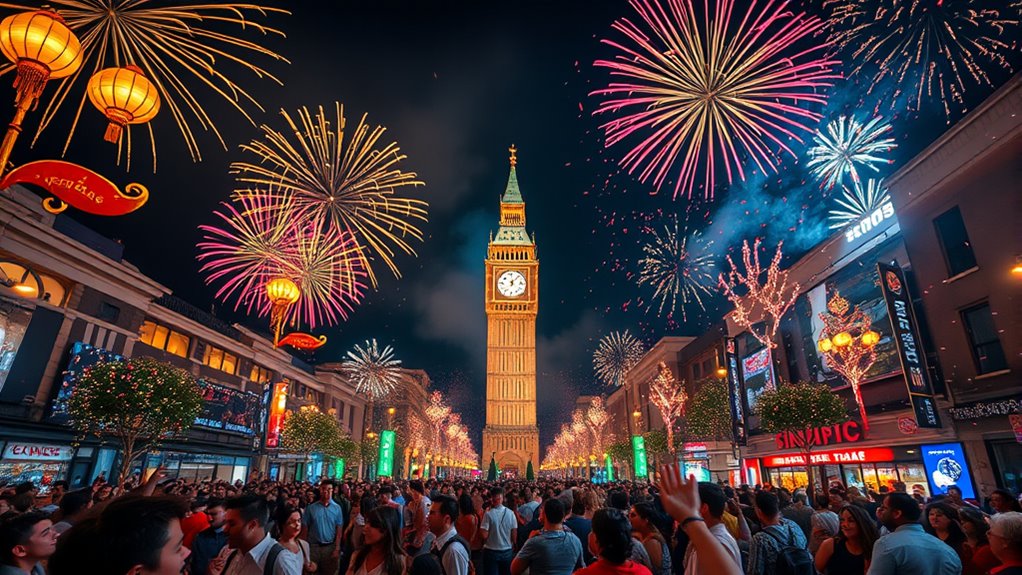

You celebrate New Year’s Day because it marks the start of a new calendar cycle, deeply rooted in ancient practices tied to lunar, solar, and celestial events. Early civilizations used these dates for agricultural and religious purposes, with reforms aligning calendars more closely to natural cycles. The Romans shifted the year to January, symbolizing new beginnings. Over time, this tradition spread worldwide, symbolizing renewal and hope—if you want to explore how this tradition evolved, keep exploring its rich history.
Key Takeaways
- New Year’s Day marks the start of a new calendar cycle rooted in ancient agricultural, religious, or celestial events.
- Calendar reforms by civilizations like the Egyptians and Romans aligned the new year with astronomical phenomena.
- The shift to January as the new year originated with Roman traditions, symbolizing new beginnings and transitions.
- Celebrating the new year symbolizes renewal, hope, and reflects historical efforts to mark time meaningfully.
- Modern customs vary worldwide but continue to honor themes of fresh starts and the passage of time.
New Year’s Day has a rich history dating back thousands of years, with origins rooted in ancient civilizations that celebrated the start of a new calendar cycle. These early societies recognized the importance of marking the passage of time, often tying it to agricultural cycles, religious beliefs, or celestial events. In many cases, the timing of the new year was closely linked to the cycles of the moon or the sun, which were vital for farming and survival. As civilizations advanced, they sought more accurate ways to track time, leading to significant calendar reforms. For example, the ancient Egyptians and Babylonians made adjustments to their calendars to better align with astronomical phenomena, ensuring that their new year celebrations coincided with specific celestial events. These reforms reflected a desire for consistency, religious significance, and societal order, and they often involved renaming or rescheduling the start of the year to fit their cultural needs.
In ancient Rome, the celebration of the new year was deeply intertwined with religious and political rituals. Originally, the Roman calendar began in March, aligning with the start of spring and the renewal of life. However, around 153 BCE, Rome officially shifted the start of the year to January, named after Janus, the two-faced god of beginnings and transitions. This change was part of broader calendar reform efforts to standardize timekeeping across the empire. January was chosen because it symbolized new beginnings and looked forward to a fresh start, a tradition that persists today. The Roman calendar reform was a vital step in shaping the modern concept of a New Year, emphasizing renewal, reflection, and societal unity.
Throughout history, calendar reforms have continually influenced how societies observe the new year. These reforms often reflected a desire to synchronize civil, religious, and agricultural calendars, ensuring that significant events aligned with natural cycles. The adoption of January 1 as the official start of the year spread through Europe during the Middle Ages, influenced by religious practices and political decrees. Over time, different cultures adopted their own unique traditions and dates for celebrating the new year, but the core idea remained consistent: it’s a symbolic moment to mark fresh beginnings. Today, while the specific date and customs vary worldwide, the underlying significance remains the same—celebrating renewal, hope, and the passage of time rooted in a long history of calendar reform and ancient traditions.

AEKE Smart Home Gym System- Fitness Mirror K1: AI-Powered All-in-One Fitness Machine for Full-Body Strength Training and Personalized Workouts
🎁🎁🎁Unlock Your Free Gift! Simply Bundle The Yoga Mat, Extender Belt Attachments, And Barbell Pad In Your Cart....
As an affiliate, we earn on qualifying purchases.
Frequently Asked Questions
How Did Different Cultures Originally Observe New Year’s Day?
Different cultures originally observed New Year’s Day through unique cultural traditions rooted in their historical origins. You might have celebrated with fireworks, feasts, or rituals to honor deities or ancestors. For example, the Chinese Lunar New Year involves dragon dances and red decorations, while the Roman calendar marked it with parades and offerings. These customs reflect each society’s way of welcoming new beginnings and honoring their heritage.
When Did January 1st Become the Global Standard New Year Date?
You’ll find that January 1st became the global standard New Year date in 1582 during Gregorian calendar reform. Prior to this, cultural variations marked New Year differently, like March 25 or lunar months. The reform aimed to align the calendar with the solar year, influencing many countries to adopt January 1st. Today, despite cultural differences, January 1st remains widely recognized worldwide as the start of the new year.
What Are the Oldest Known New Year’s Celebrations?
You’ll find that some of the oldest known New Year’s celebrations date back to ancient calendars like the Sumerians and Babylonians, who marked their New Year with early rituals around spring or solstice. These early rituals often involved offerings and festivities to honor gods and guarantee a prosperous year ahead. Such traditions highlight humanity’s long-standing desire to mark time’s passage and seek blessings for the future.
How Has New Year’s Day Evolved Over Centuries?
Imagine a clock that’s constantly ticking, changing with each new era—you’re witnessing how New Year’s Day has evolved over centuries. Calendar changes, like adopting the Gregorian calendar, shifted the date, while cultural shifts turned celebrations into global festivities. Over time, traditions merged and adapted, transforming New Year’s Day from ancient religious rites to a modern celebration of new beginnings, reflecting society’s enduring desire for renewal and hope.
Why Do Some Countries Celebrate New Year’s on Different Dates?
You’ll notice some countries celebrate New Year’s on different dates because they follow distinct calendar systems and cultural traditions. For example, while many use the Gregorian calendar, others follow the Lunar or Islamic calendars, which align with lunar cycles or religious events. These differences influence when communities mark the new year, reflecting their unique cultural traditions and historical practices. This diversity highlights how calendar systems shape global celebrations.

VETROVUE 36"x24" Smart LED Bathroom Mirror - Dimmable Brightness, Backlit & Frontlit Lighting, 3 Color Modes, Anti-Fog, Memory Function, Wall Mounted Lighted Vanity Makeup Mirror
Professional Lighting Control with Salon-Grade Customization: Take command of your ideal illumination. This led bathroom mirror and lighted...
As an affiliate, we earn on qualifying purchases.
Conclusion
As the first light of January dawns, you step into a world renewed, where fireworks burst like stars scattering hopes across the sky. The echoes of ancient traditions mingle with fresh promises, reminding you that each new year is a blank canvas waiting for your dreams. Embrace this moment, feel the crisp air of possibility, and carry forward the timeless spirit of celebration, knowing that every dawn offers a chance to start anew.

Nordictrack Vault Complete Reflective Trainer with Fitness Accessories, Pivoting Mirror and Touchscreen, and 30-Day iFIT Family Membership
30-Day iFIT Family Membership Included; Stream live & on-demand workouts on your equipment with Global Workouts & Studio...
As an affiliate, we earn on qualifying purchases.

Smart Gym Mirror for Home Workout | 32" HD Touch-Screen Andriod OS | 63" Reflective Surface | No VIP Fees Support Various APPs, Voice Control, Music Sync LED Light Strip, for Home Gym/ Yoga/ Dance
Advanced Android Open System: Powered by Android, this MWE Smart Mirror features a fully open operating system that...
As an affiliate, we earn on qualifying purchases.