
On January 7, you’ll observe Orthodox Christmas through sacred church services, including midnight liturgies with hymns and candle lighting. Churches are decorated with icons of saints, Christ, and the Virgin Mary, emphasizing tradition and spiritual reflection. Families enjoy festive meals with foods like fish, symbolizing Christ, and share in customs rooted in Easter traditions that foster hope and renewal. If you explore further, you’ll discover how these deeply rooted practices celebrate faith and cultural heritage.
Key Takeaways
- Orthodox Christians celebrate Christmas on January 7 due to the Julian calendar, featuring unique traditions.
- Churches are decorated with icons of saints, Christ, and the Virgin Mary, emphasizing spiritual reflection.
- Midnight liturgies with hymns and candle lighting are central to the Christmas Eve celebration.
- Traditional festive foods, like fish, symbolize Christ and reinforce spiritual gratitude.
- The season focuses on reflection, renewal, and maintaining religious and cultural heritage through customs.
Have you ever wondered why Orthodox Christians celebrate Christmas on a different date than others? It all comes down to the calendar they follow. While many around the world mark Christmas on December 25, Orthodox Christians often celebrate on January 7 because they use the Julian calendar instead of the Gregorian one. This difference leads to unique traditions that make their Christmas observance special and deeply rooted in history.
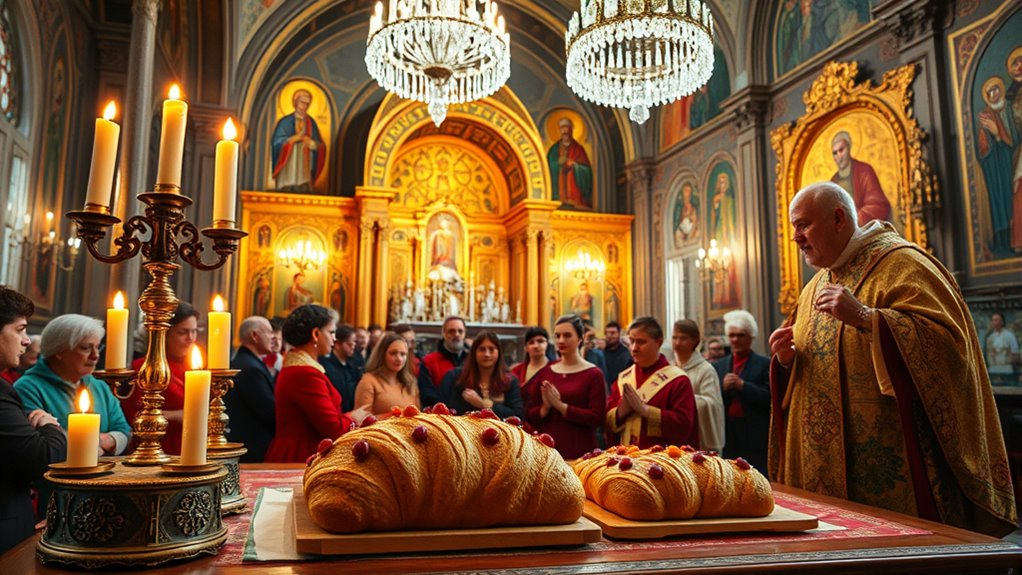
On this day, you’ll notice that Orthodox Christmas festivities are rich with religious iconography. Churches are decorated with icons—sacred images of saints, Christ, and the Virgin Mary—that serve as focal points for worship and reflection. These icons aren’t just decorative; they carry spiritual significance, reminding believers of the divine presence and the stories that shape their faith. During Christmas services, you might see processions featuring these icons, emphasizing the importance of religious tradition and history.
Orthodox Christmas features icons that symbolize divine presence and deepen faith traditions during worship.
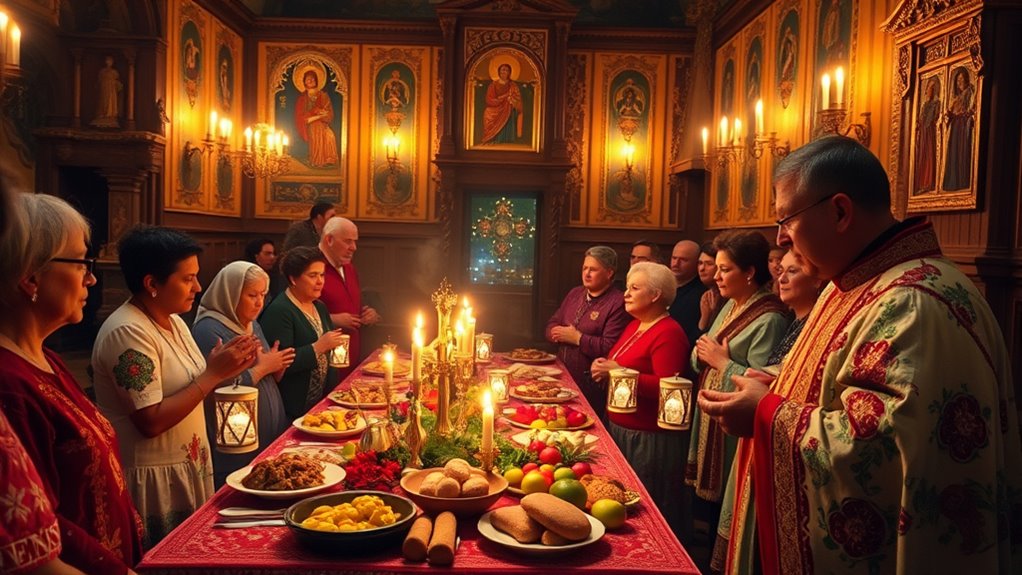
Easter traditions influence many of the customs you’ll observe during Orthodox Christmas. Just as Easter involves elaborate rituals and symbolic foods, Christmas celebrations also feature special liturgies, hymn singing, and the sharing of traditional foods. The midnight liturgy on Christmas Eve is a highlight, where you’ll witness the congregation singing ancient hymns and lighting candles that symbolize Christ’s birth. These traditions foster a sense of community and continuity, connecting present-day believers with centuries of faith practices.
Food plays a fundamental role in Orthodox Christmas celebrations. You might be invited to share a festive meal that includes dishes prepared according to religious guidelines. Many of these foods are symbolic, representing purity, renewal, and gratitude. Fish, for example, is often central because it’s associated with Christ and the Eucharist. The preparation and sharing of these foods reinforce the spiritual significance of the holiday, bridging the physical and divine spheres. Additionally, the use of religious iconography enhances the spiritual atmosphere, helping worshippers focus on the divine mysteries of Christmas.
Throughout the season, you’ll also notice that the celebration emphasizes reflection and spiritual renewal. The use of religious iconography and adherence to traditional Easter-inspired customs help reinforce the message of hope and salvation that Christmas symbolizes. The unique timing, combined with these deeply rooted customs, creates a Christmas experience that’s both reverent and rich in cultural heritage. When you participate or observe, you’ll see how these traditions keep the faith alive, linking past and present in a vibrant expression of devotion.
Top picks for "orthodox christma tradition"
Open Amazon search results for this keyword.
As an affiliate, we earn on qualifying purchases.
Frequently Asked Questions
How Do Orthodox Christmas Customs Differ Across Countries?
You’ll notice that Orthodox Christmas customs differ across countries through regional practices and cultural variations. In Greece, you might attend midnight church services and enjoy special foods like baklava, while in Russia, celebrating includes singing carols and visiting friends. In Serbia, you’ll see the burning of the badnjak, a symbolic oak branch. These regional practices shape each country’s unique way of honoring this holiday, blending tradition with local customs.
What Are Traditional Orthodox Christmas Foods?
You’ll enjoy traditional foods like fish, especially carp or herring, and hearty dishes such as borscht and stuffed vegetables during Orthodox Christmas. Festive recipes often include bread, cheese, and dried fruits, symbolizing abundance and joy. You might also indulge in sweet treats like honey cake or nuts. These foods bring families together, honoring the season’s spirit of renewal and faith with rich, meaningful flavors.
Are There Specific Orthodox Christmas Prayers or Hymns?
During Orthodox Christmas, you’ll hear specific prayers and traditional hymns that celebrate the Nativity. Orthodox Christmas prayers focus on honoring Christ’s birth and seeking blessings for the new year. Traditional hymns, often sung during midnight services, emphasize the miracle of Christ’s arrival and His divine nature. Participating in these prayers and hymns helps you deepen your spiritual connection and fully experience the sacred atmosphere of the holiday.
How Do Orthodox Christians Celebrate the Epiphany?
You celebrate Epiphany with a special focus on baptism traditions and Holy water blessings. You attend church services where priests bless water, which you then take home for personal use or to bless your home. Many participate in river or lake plunges, symbolizing Christ’s baptism. These rituals deepen your spiritual connection, reminding you of Jesus’ baptism and the divine revelation, making Epiphany a meaningful and sacred day in your faith.
What Is the History Behind the January 7 Date?
You might wonder why Orthodox Christians celebrate Christmas on January 7. The historical origins trace back to the liturgical calendar, which follows the Julian calendar instead of the Gregorian one used worldwide today. This difference causes the date shift. The Julian calendar’s slower calculation of leap years maintains the January 7 date for Christmas, preserving ancient traditions rooted in early Christian history and ensuring the celebration aligns with the church’s longstanding customs.
Conclusion
As you embrace the rich traditions of Orthodox Christmas on January 7, remember that celebrating together strengthens bonds and fills hearts with joy. These customs, passed down through generations, remind us that “the more you give, the more you gain.” So, cherish the time spent with loved ones, share kindness, and keep the spirit alive. In doing so, you carry forward a timeless message of love and unity that truly lasts.