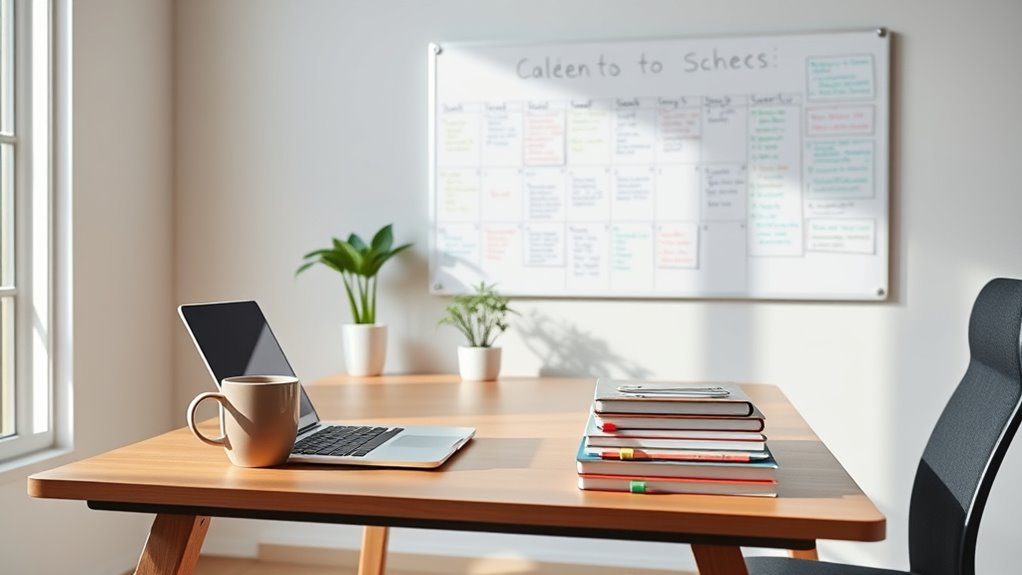

To get organized in 2026, start by decluttering your digital and physical spaces. Delete unnecessary files, organize remaining items into clear folders, and unsubscribe from unwanted emails. Create structured schedules using digital calendars and prioritize tasks to stay on track. Develop habits like weekly tidying and automating recurring tasks. Implementing simple systems like these will boost your productivity, reduce stress, and give you more control over your goals—if you keep exploring, you’ll discover even more effective strategies.
Key Takeaways
- Implement digital decluttering by deleting unnecessary files and organizing remaining data into labeled folders.
- Use digital calendars and task management apps to create structured schedules and prioritize tasks.
- Automate recurring tasks like bill payments and email filters to reduce daily digital clutter.
- Dedicate weekly time to tidying physical and digital spaces to maintain a clutter-free environment.
- Develop consistent routines and review goals regularly to sustain organization and adapt systems as needed.
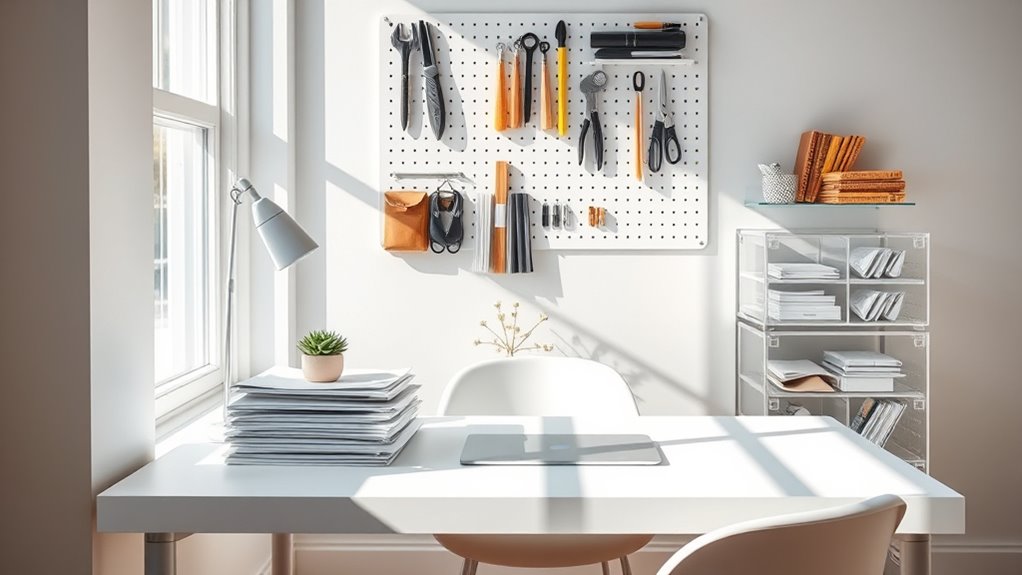
Are you ready to make 2026 your most organized year yet? One of the best ways to start is by tackling digital decluttering. Your digital life can quickly become overwhelming if you’re not careful, with emails piling up, files scattered across folders, and notifications constantly vying for your attention. Taking control of your digital space isn’t just about freeing up storage; it’s about creating a streamlined environment that saves you time and reduces stress. Begin by deleting unnecessary files and emails, organizing what remains into clearly labeled folders, and unsubscribing from unwanted newsletters. This process clears mental clutter and makes it easier to find what you need when you need it. As you clean up your digital environment, you’ll notice how it directly impacts your time management. Less time spent searching for documents or sifting through clutter means more time for the things that truly matter. Digital decluttering is a foundational step toward a more efficient life, allowing you to focus your energy on your goals rather than managing chaos.
Once your digital space is under control, you’ll find it easier to implement effective time management strategies. Creating a daily or weekly plan helps you prioritize tasks and set realistic goals, preventing you from feeling overwhelmed. Use tools like digital calendars, task management apps, or simple to-do lists to keep track of your commitments. Block out dedicated periods for work, relaxation, and personal projects. When your schedule is clear and organized, you’ll avoid the trap of procrastination and last-minute cramming. Remember, the goal isn’t to fill every minute with activity, but to allocate your time intentionally, so you make progress without burnout. Consistency is key; review and adjust your plans regularly to stay on track.
In addition to digital decluttering and structured scheduling, developing habits that support your organization efforts will make a huge difference. Set aside time each week to tidy your digital and physical spaces, review your goals, and plan ahead. Automate recurring tasks when possible, such as bill payments or email filters, to save even more time. Keep your environment simple—minimal clutter in your workspace can considerably boost your focus and efficiency. As you develop these habits, you’ll notice a ripple effect: less chaos, more clarity, and an increased sense of control over your life. Getting organized in 2026 isn’t about perfection; it’s about creating systems that work for you, making your days more manageable and your goals more attainable. With digital decluttering and sharp time management, you’ll lay a solid foundation for a more productive, balanced year.

Sooez 24 Pockets Expanding File Folder with Blank Labels, According File Organizer with Expandable Cover, Desktop Accordion Folders Letter A4 Paper Document Storage Organizer, Black
Stable & sturdy construction: Expanding file folder is made from durable wipe-clean polypropylene. Acid-free and high-quality for using…
As an affiliate, we earn on qualifying purchases.
As an affiliate, we earn on qualifying purchases.
Frequently Asked Questions
How Can I Stay Motivated to Maintain Organization Long-Term?
You stay motivated by habit tracking your organization efforts daily, which keeps you accountable and aware of your progress. Reward yourself for sticking to your systems, whether it’s a small treat or a break, to reinforce positive habits. Remember, consistency is key. When you see how far you’ve come, it fuels your motivation to maintain your organization long-term, making it feel rewarding rather than a chore.
What Are the Best Tools for Digital Organization?
You should use cloud storage like Google Drive or Dropbox to keep your files accessible and secure, and task management tools like Todoist or Asana to stay on top of your to-do list. These tools sync across your devices, making it easy to update and access your organization system anywhere. Incorporating both cloud storage and task management helps you stay organized, efficient, and motivated to maintain your digital system long-term.
How Do I Involve Family Members in Organization Efforts?
Think of your family as a team rowing together, each person with a role. To involve them in organization efforts, encourage family collaboration by setting shared responsibilities and open communication. Create a family calendar or chore chart, and hold regular planning sessions to keep everyone on the same page. When everyone pitches in, your home runs smoothly, making life less chaotic and more enjoyable for all.
What Should I Do if I Fall Behind on My System?
If you fall behind on your system, don’t get discouraged. Reach out to an accountability partner to stay motivated and gain support. Schedule routine reviews to identify what’s working and what needs adjustment. Break tasks into smaller steps to make progress manageable. Consistently checking in with yourself and your accountability partner helps you stay on track, rebuild momentum, and ultimately, keep your organizational system effective and sustainable.
How Can I Adapt Systems for Small Living Spaces?
Did you know that 65% of people living in small spaces find clutter overwhelming? To adapt your systems, use compact storage solutions that maximize every inch. Invest in multi-functional furniture like beds with built-in drawers or fold-away desks to save space. Keep only essentials and regularly declutter. This approach keeps your small living space organized, functional, and stress-free, making it easier to maintain your system every day.

To-Do Daily planner Task management Productivity tools Note-taking app by Richa non dated: Daily routine
As an affiliate, we earn on qualifying purchases.
As an affiliate, we earn on qualifying purchases.
Conclusion
Now that you have simple systems to streamline your life, imagine how much more you can accomplish with less stress. Isn’t it worth taking that first step toward organization today? By simplifying your routines and creating lasting habits, you’ll find more time for what truly matters. Don’t wait for perfect moments—start now, and watch your life become more manageable and fulfilling. After all, isn’t a simpler life exactly what we all need in 2026?
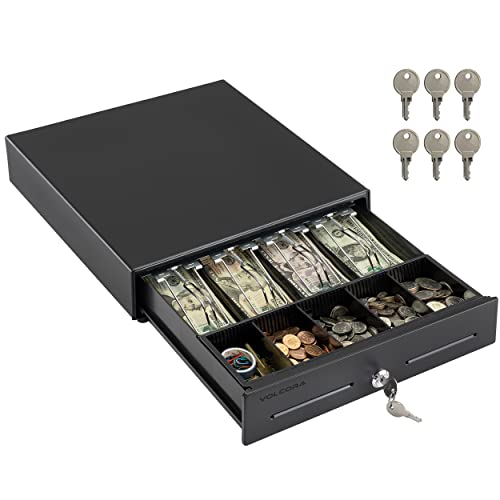
Volcora 13" Electronic Cash Register Drawer for Point of Sale (POS) System with 4 Bill 5 Coin Cash Tray, Removable Coin Compartment, 12-24V, RJ11/RJ12 Key-Lock, Black – for Small Businesses
DURABLE POS CASH DRAWER: Volcora cash register drawer measures 13"x13.25"x4", voltage is at 12-24 VDC. Our money drawer…
As an affiliate, we earn on qualifying purchases.
As an affiliate, we earn on qualifying purchases.

SKYDUE 360 Rotating Plastic Desk Pen Organizer with 5 Slots, Dual-Purpose Art Supply Pencil Cup for Office, School, Home
Space-Saving: The design of 5 compartments provides enough storage capacity without taking up a lot of desktop space….
As an affiliate, we earn on qualifying purchases.
As an affiliate, we earn on qualifying purchases.