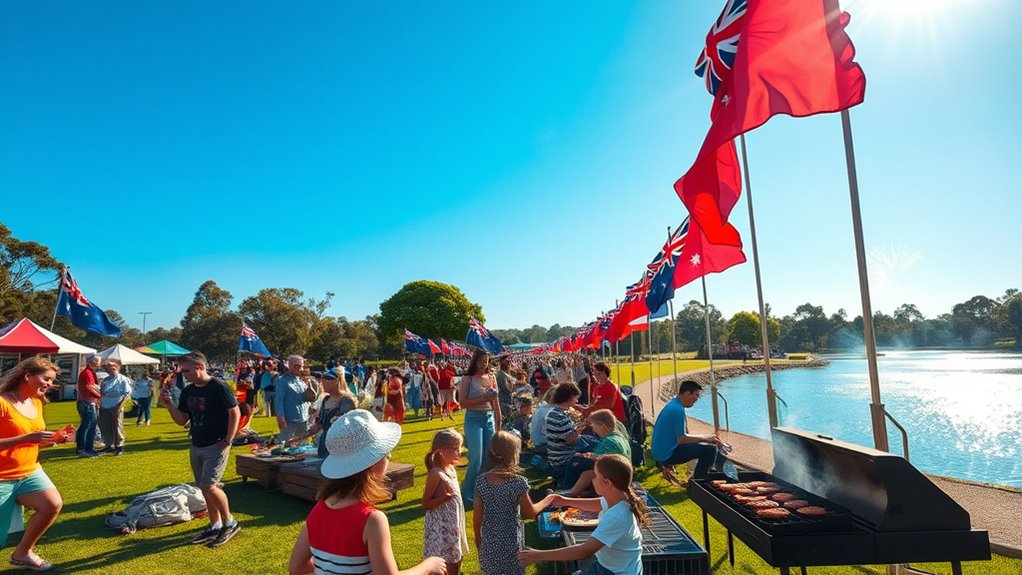

Australia Day, observed every January 26, commemorates the arrival of the First Fleet in 1788 and showcases the nation’s diversity and history. It’s a day for celebrations like community gatherings, fireworks, beaches, barbecues, and cultural performances. However, it’s also a complex day for Indigenous Australians, known as Invasion Day, highlighting issues of colonization and reconciliation. To understand how Australians honor their national identity and reflect on the past, keep exploring the significance behind the celebrations.
Key Takeaways
- Australia Day marks the anniversary of the First Fleet’s arrival in 1788, celebrating the nation’s origins and cultural diversity.
- It is a complex day, recognized as Invasion Day by Indigenous Australians, highlighting colonization’s impact on Aboriginal and Torres Strait Islander peoples.
- Celebrations include community events like parades, fireworks, barbecues, and outdoor activities across cities and towns.
- Some communities hold protests or marches promoting reconciliation, Indigenous rights, and awareness of historical issues.
- The day blends remembrance of Indigenous history with festivities showcasing Australia’s multicultural identity and national pride.
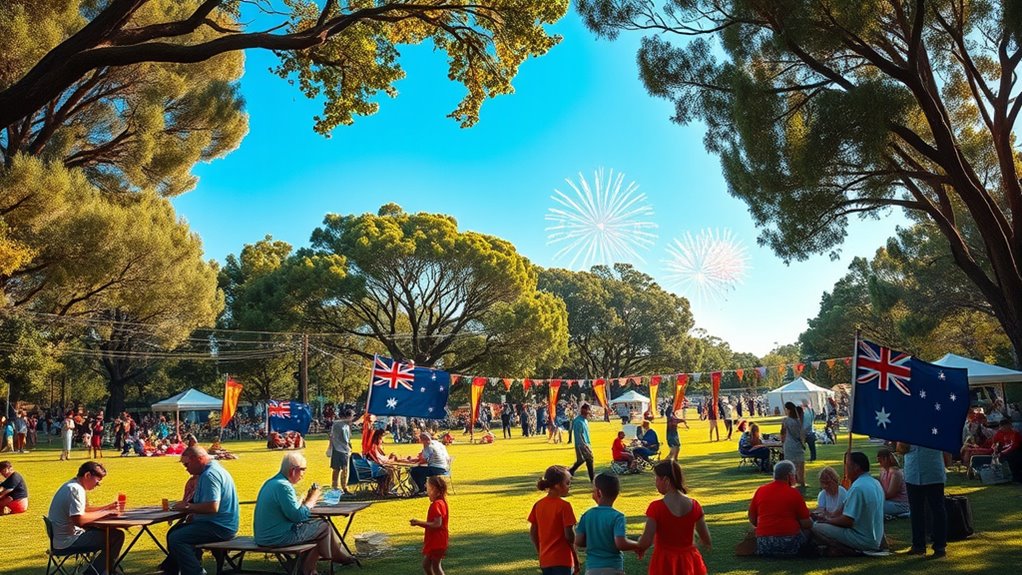
Have you ever wondered what Australia Day truly celebrates? This national holiday marks the anniversary of the First Fleet’s arrival in 1788, but it’s also a day that holds deeper meanings rooted in Indigenous history and modern festivities. For many Australians, it’s a time to reflect on the nation’s origins, its cultural diversity, and its shared identity. However, it’s essential to recognize that the day’s significance is complex and sometimes controversial, especially among Indigenous Australians. They see Australia Day as Invasion Day, a reminder of colonization and its devastating impacts on Aboriginal and Torres Strait Islander communities. Acknowledging Indigenous history means understanding the long, rich cultures that existed long before 1788 and recognizing the pain caused by colonization. It’s a day that prompts many to listen, learn, and advocate for reconciliation and recognition of Indigenous peoples’ rights. Recognizing the importance of cultural awareness can foster greater understanding and respect across communities.
Australia Day reflects both celebration and the complex history of Indigenous peoples and colonization.
On January 26th, Australians come together to celebrate with a variety of modern festivities that showcase the country’s vibrant culture. The day kicks off with community gatherings, parades, and fireworks, creating a festive atmosphere across cities and towns. People often participate in barbecues, picnics, and outdoor activities, enjoying the warm summer weather. Beaches fill with families swimming and playing, while parks host concerts and cultural performances. Many Australians also take the opportunity to display their national pride through flag-raising ceremonies, sporting events, and social gatherings. These celebrations highlight the nation’s diversity, from Indigenous traditions to multicultural influences that shape contemporary Australia.
While the festivities are lively and family-oriented, there’s also a growing movement to observe the day with more awareness of its historical implications. Some communities hold protests or marches emphasizing reconciliation and Indigenous rights, aiming to shift the focus from purely celebration to reflection and dialogue. This evolving perspective encourages Australians to think about the true meaning of the day and the importance of inclusive national identity.
In essence, Australia Day is a blend of remembrance and celebration. It’s a moment to honor the country’s Indigenous history, acknowledge the colonial past, and celebrate modern achievements and multiculturalism. Whether you’re watching fireworks light up the sky, participating in community events, or listening to stories of Indigenous resilience, the day invites you to be part of Australia’s ongoing story — one of diversity, history, and hope for the future.
Frequently Asked Questions
How Did Australia Day Originate Historically?
You might not realize it, but Australia Day originated from the colonial origins when British settlers arrived in 1788. It marks the anniversary of the First Fleet’s arrival, which played a key role in shaping Australia’s national identity. Over time, this day became a way for Australians to celebrate their history and culture, even though it’s also a reminder of complex and sometimes painful colonial past.
Are There Regional Differences in Celebrating Australia Day?
Yes, there are regional differences in celebrating Australia Day. You might notice variation in customs and celebration styles across the country. In some areas, communities hold large fireworks displays and outdoor events, while others focus on local ceremonies or family gatherings. These celebration variations reflect local traditions and regional customs, making each Australia’s Day celebration unique. So, depending on where you are, your experience of the holiday could be quite different.
What Are the Significant Controversies Surrounding Australia Day?
You should know that significant controversies surround Australia Day because of its colonial legacy, which many see as celebrating colonization and the mistreatment of Indigenous Australians. These issues spark debates about changing the date to promote reconciliation efforts and acknowledge Indigenous perspectives. As you participate in festivities, consider the impact of the holiday’s history and support efforts toward healing and recognition for Indigenous communities.
How Do Indigenous Australians View Australia Day?
You might be surprised to learn that many Indigenous Australians view Australia Day as a day of mourning rather than celebration. Their perspectives highlight the cultural significance of this day as a reminder of colonization and its impacts. For Indigenous communities, the date symbolizes a time of loss and injustice. Recognizing their perspectives fosters understanding and respect, encouraging conversations about how to honor Indigenous culture and history on this important day.
What Are the Environmental Impacts of Australia Day Celebrations?
On Australia Day, your celebrations can impact the environment by increasing waste, energy use, and carbon emissions, affecting cultural sustainability and the environment. You might notice more litter, plastic waste, and pollution from fireworks and events. To reduce your environmental footprint, consider eco-friendly activities like recycling, using sustainable materials, and supporting local conservation efforts. Small changes can help protect Australia’s natural beauty for future generations while still enjoying the festivities.
Conclusion
So, as you celebrate Australia Day, remember it’s a day of pride and unity—unless, of course, you’re aware of its complex history. While fireworks and barbecues light up the sky, some see it as a reminder of the land’s troubled past. Ironically, what’s meant to be a day of national joy can also be a time for reflection. After all, true celebration might just require acknowledging both the history and the hope it inspires.