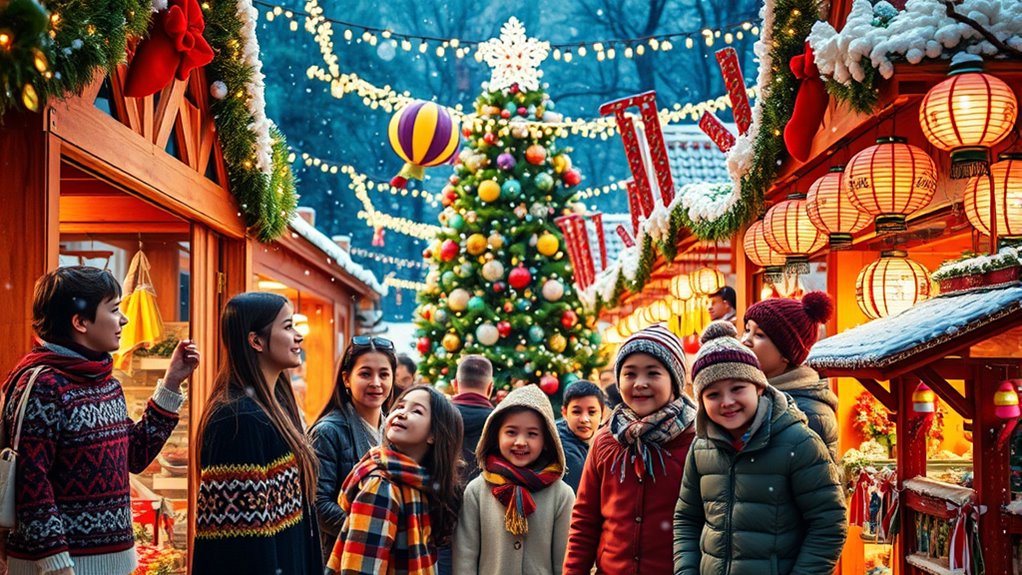

Around the world, Christmas traditions celebrate love, giving, and joy in unique ways. You might see Santa at the North Pole, children hanging stockings, or communities sharing festive meals. In Spain and Latin America, gifts come on Three Kings’ Day, while Scandinavian kids leave out cookies for Santa or a Christmas gnome. Each culture adds its special touch, creating memorable moments. Keep exploring to discover how different customs make the holiday season bright everywhere.
Key Takeaways
- Different countries celebrate Christmas with unique customs like gift exchanges on January 6th or hanging stockings for Santa or gnomes.
- Santa Claus and similar figures are central, but their portrayal varies across cultures, from North Pole workshops to European traditions.
- Traditional activities include festive feasts, music, dances, and community gift drives, emphasizing kindness and shared joy.
- Regional differences influence gift-giving timing, with some cultures exchanging presents on Christmas Eve, Christmas Day, or Three Kings’ Day.
- Decorations such as Christmas trees, ornaments, and lights create a cozy atmosphere, reflecting local cultural symbols and festive spirit.
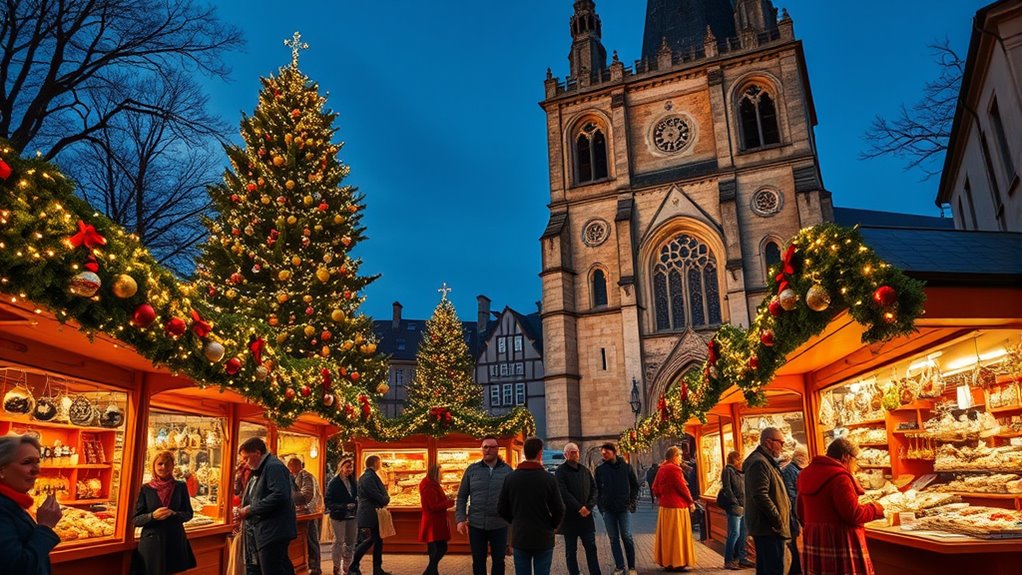
Christmas is celebrated in countless ways around the world, each culture adding its own unique customs and traditions. One of the most iconic symbols of Christmas is Santa Claus, and many people picture him working diligently in Santa’s Workshop, preparing gifts for children everywhere. This magical place, often depicted as a bustling, cheerful workshop at the North Pole, captures your imagination and embodies the spirit of giving. In many countries, children zealously await Santa’s arrival, writing letters and leaving out cookies and milk as a thank-you for his hard work. The idea of Santa’s Workshop highlights the joy of gift-giving, which is central to Christmas celebrations worldwide.
Gift giving customs vary greatly from one culture to another. In some nations, like the United States and much of Europe, exchanging presents on Christmas Eve or Christmas Day is a cherished tradition. You might find yourself wrapping gifts, carefully choosing items that will bring joy to loved ones. In other places, such as Spain or Latin America, gifts are often exchanged on Three Kings’ Day, January 6th, commemorating the visit of the Wise Men. These customs reflect local religious and cultural influences, making Christmas a highly personalized celebration.
In many countries, the act of gift giving extends beyond just material presents. It’s about sharing love, gratitude, and warmth with those around you. You might participate in community gift drives or organize secret Santa exchanges with friends and family. The anticipation of giving and receiving fosters a sense of connection and community that defines the holiday season. In some cultures, gifts are placed under a decorated Christmas tree, which acts as a focal point for festivities. You might enjoy decorating your own tree with ornaments and lights, creating a cozy space to celebrate.
In certain traditions, the gesture of giving is accompanied by special rituals. For example, in Scandinavian countries, children hang stockings for Santa or the Christmas gnome to leave small gifts and treats. Meanwhile, in Eastern Europe, elaborate gift exchanges are often accompanied by traditional music, dance, and festive feasts. No matter where you are, the underlying theme remains the same: Christmas is a time to give, to share, and to create joyful memories with loved ones.
From Santa’s Workshop to gift-giving customs, these traditions illustrate how Christmas adapts to different cultures while maintaining its core message of kindness and generosity. As you participate in these customs, you’re part of a global celebration that unites people through acts of love and thoughtfulness, making the holiday season truly special worldwide.
Additionally, many cultures emphasize the importance of mindful gift-giving, ensuring that the act of giving aligns with personal values and community well-being.

Versace Miniatures Collection for Women - 5 Pc Fragrance Gift Set | Iconic Luxury Perfumes | Travel-Friendly & Perfect for Gifting
5-Piece Mini Gift Set: Includes five 0.17 oz miniatures of Versace's most iconic fragrances: Dylan Turquoise, Dylan Purple,...
As an affiliate, we earn on qualifying purchases.
Frequently Asked Questions
How Do Different Countries Celebrate Christmas Eve?
On Christmas Eve, you might enjoy singing Christmas carols, which helps create a joyful atmosphere. In some countries, families gather for festive dinners, decorating their homes with colorful, festive decorations. You could attend midnight church services or exchange gifts. Each country adds its unique touch, but the common theme is celebrating with loved ones, singing carols, and enjoying the warm glow of festive decorations that make the night special.
What Are the Origins of Unique Christmas Customs Worldwide?
You might find that the origins of unique Christmas customs worldwide stem from ancient traditions, religious beliefs, and local cultural customs. For example, some customs, like gift-giving, trace back to early Christian practices, while others, like festive foods or decorations, are influenced by regional history and folklore. These traditions have evolved over centuries, blending religious significance with local culture, creating the diverse and vibrant ways communities celebrate Christmas today.
How Do Religious Beliefs Influence Christmas Traditions Globally?
Religious beliefs shape Christmas traditions worldwide by emphasizing faith-based practices and religious symbolism. You might observe candlelight services, reflecting Jesus as the light of the world, or participate in nativity plays that depict his birth. These customs reinforce the spiritual significance of Christmas, reminding you of its religious roots. Your celebrations often include prayers, church visits, and rituals that honor Christian faith, making the holiday meaningful beyond just festivities.
Are There Any Unusual Christmas Foods in Different Cultures?
You’ll find plenty of unusual Christmas foods across cultures, serving as festive delicacies and culinary surprises. In Japan, fried chicken is a popular holiday treat, while in the Philippines, you enjoy lechon, a roasted pig. In Italy, panettone sweet bread is a must-have, and in Poland, you might indulge in carp. These unique foods reflect local traditions and add a special touch to worldwide celebrations.
How Have Modern Influences Changed Traditional Christmas Celebrations?
Modern influences have transformed traditional Christmas celebrations like a snowball rolling downhill. You now see more commercialized scenes, with Santa myths evolving into global icons, and gift-giving customs expanding beyond family to online exchanges. Technology enables virtual gatherings, and social media spreads holiday cheer instantly. These changes blend old traditions with new trends, making your celebration more inclusive and flexible, but sometimes overshadowing the heartfelt, local customs that once defined Christmas.

Bellavita Luxury Unisex Perfume Gift Set with Honey Oud, White Oud, Skai, and Fresh | 80ml | Perfume for Men and Women | Honey, Artemisia Lemon, Bergamot, and Sweet Almond Notes | Women's Day Special
Luxury Unisex Collection: This premium perfume gift set features three distinctive fragrances - White Oud, Skai, and Fresh...
As an affiliate, we earn on qualifying purchases.
Conclusion
No matter where you celebrate, Christmas brings people together in unique and meaningful ways. From dazzling lights to heartfelt traditions, each culture adds its own flavor to the holiday spirit. Embrace these differences and see how they enrich your understanding of the season. Remember, the world is your oyster—there’s always something new to discover. So, keep an open mind and let the magic of Christmas inspire you to cherish every moment.

Charrier Parfums 10 Eaux de Parfum Luxurious Gift Box - 57.8 ml - Made in Provence, France - by Pan-American Trade
Iconic French Perfumery: This luxurious set from Charrier Parfums, a family-owned fragrance house since 1888, offers a collection...
As an affiliate, we earn on qualifying purchases.

Bellavita Luxury Men's Perfume Gift Set with CEO Man, G.O.A.T., Klub, and Oud | 80ml | Perfume for Men | Lavender, Patchouli, Lemon, and Caramel Notes | Long Lasting Men's Fragrance
A set of 4 mini perfumes, including the iconic fragrances of G.O.A.T, OUD, CEO Man, and KLUB Man.
As an affiliate, we earn on qualifying purchases.