
On Epiphany (Three Kings Day), you celebrate the revelation of Jesus to the world with traditions like leaving shoes or hay for the Wise Men’s camels, symbolizing their journey. You’ll see religious symbols like nativity scenes and special church services that highlight the gift of gold, frankincense, and myrrh. This day emphasizes faith, generosity, and community, blending spiritual meaning with cultural customs, and if you continue exploring, you’ll discover the deeper significance behind these cherished traditions.

Get the little things that make your day delivered free — and shop member deals
- Fast, free delivery on millions of items
- Access to Prime Big Deal Days deals on October 6–7
- Prime Video, Amazon Music and more included
Key Takeaways
- Celebrates the revelation of Jesus to the world, marked by the visit of the Wise Men on January 6th.
- Involves gift-giving that symbolizes gold, frankincense, and myrrh, reflecting Jesus’ kingship and divinity.
- Children participate by leaving shoes, hay, or water for the Wise Men’s camels, symbolizing their journey.
- Features religious symbols like nativity scenes and processions that emphasize spiritual significance.
- Combines faith and cultural customs to promote reflection on divine revelation, generosity, and shared devotion.

Celebrating Epiphany, also known as Three Kings Day, marks the revelation of Jesus Christ to the world, traditionally observed on January 6th. It’s a day filled with rich traditions that connect faith, community, and history. One of the most prominent customs you might participate in is gift giving, which echoes the gifts brought by the Wise Men to baby Jesus. These gifts—gold, frankincense, and myrrh—hold deep religious symbolism. Gold represents kingship, frankincense symbolizes divinity, and myrrh foreshadows Jesus’ suffering and death. When you exchange gifts during Epiphany, you’re reenacting this act of reverence and recognition of Jesus’ divine nature. It’s a meaningful tradition that emphasizes generosity and love, reminding you of the significance of giving from the heart.
Celebrating Epiphany honors the Wise Men’s gifts—gold, frankincense, and myrrh—symbolizing kingship, divinity, and sacrifice.
In many cultures, children avidly anticipate the arrival of the Three Kings or Wise Men, often leaving out shoes or placing hay and water for their camels. This tradition symbolizes the journey the Wise Men took to find the newborn King, and it’s a vivid way to teach children about faith and perseverance. When you participate in these customs, you’re not just exchanging presents—you’re embracing a story of hope and divine revelation. The religious symbolism of the Wise Men’s journey and gifts reinforces the idea that Jesus’ arrival was a profound moment of spiritual awakening, meant to be celebrated with both reverence and joy.
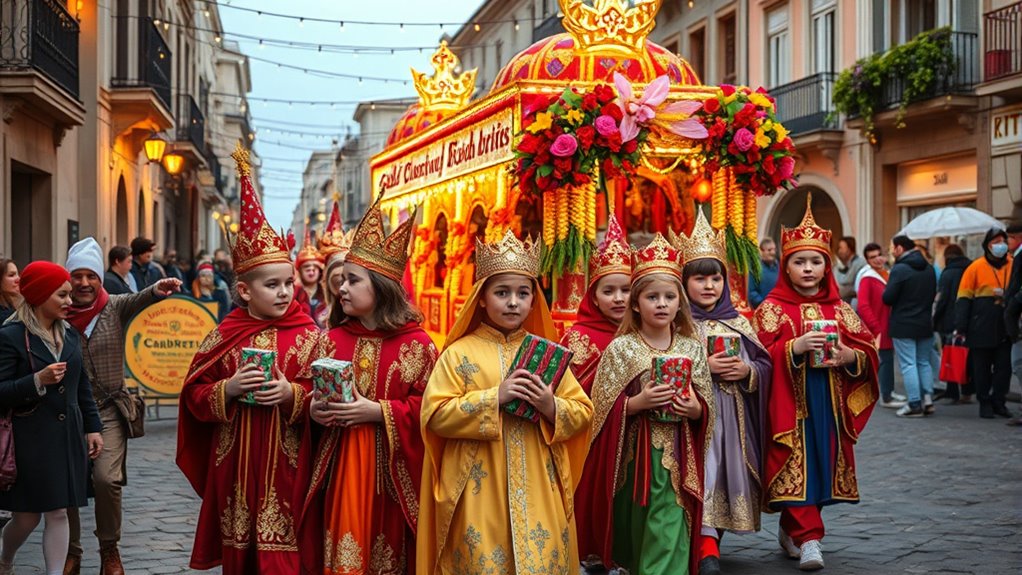
The religious symbolism extends beyond gift giving. Many communities hold special church services, processions, and nativity scenes that depict the Nativity story and the Wise Men’s visit. These visuals serve as powerful reminders of the spiritual significance of Epiphany. As you observe these traditions, you connect with centuries of faith and shared devotion. The act of adorning nativity scenes with the Wise Men, often positioned farther from the manger to indicate their delayed arrival, underscores the idea of divine timing and revelation. Recognizing the spiritual significance of these customs deepens your understanding of their importance and enriches your celebration.
In essence, Epiphany is a celebration that blends religious symbolism with cultural customs. Whether you’re giving gifts, participating in processions, or simply reflecting on the story, you’re partaking in a tradition that honors a pivotal moment in Christian faith. It’s a day that encourages you to look beyond the material and focus on the spiritual truths that this feast embodies. Celebrating Epiphany reminds you of the importance of faith, hope, and the joy of giving, making it a truly meaningful observance.
Epiphany nativity scene figurines
As an affiliate, we earn on qualifying purchases.
As an affiliate, we earn on qualifying purchases.
Frequently Asked Questions
How Do Different Countries Celebrate Epiphany Around the World?
You’ll see cultural variations in Epiphany celebrations worldwide, with each country showcasing unique traditions. In Spain, you might wear traditional costumes and enjoy parades featuring the Three Kings. In Mexico, the focus is on festive processions and sharing “Rosca de Reyes.” Meanwhile, in Italy, Epiphany marks the end of Christmas with special sweets and events. These celebrations reflect local customs, blending religious significance with vibrant cultural expressions.
What Are the Origins of the Three Kings Day Tradition?
A wise man once said, “History repeats itself.” The tradition of Three Kings Day has biblical origins, commemorating the visit of the Magi to baby Jesus. Its historical significance lies in celebrating the revelation of Christ to the Gentiles. This practice dates back to early Christian centuries, honoring the journey of the wise men and emphasizing the recognition of Jesus as King, making it a deeply meaningful and enduring holiday worldwide.
Are There Any Specific Foods Associated With Epiphany Celebrations?
You’ll find that Epiphany foods are central to the celebration, with traditional recipes like King Cake in New Orleans, Rosca de Reyes in Mexico, or Bizcochos in Spain. These dishes often feature sweet breads or cakes decorated with colorful toppings, symbolizing the gifts brought by the Three Wise Men. Sharing these special foods helps you connect with cultural traditions and enjoy the festive spirit of Epiphany.
How Has the Celebration of Epiphany Evolved Over History?
You might think Epiphany has stayed timeless, but it’s undergone fascinating historical transformations. Over time, traditions have shifted from ancient religious rites to lively parades and gift exchanges. Modern adaptations blend old customs with contemporary celebrations, reflecting cultural changes and societal values. So, as you celebrate today, remember that this holiday has evolved profoundly, transforming from solemn observance to a vibrant, diverse festivity that connects past and present in unexpected ways.
What Are Some Unique Regional Customs Related to Epiphany?
You might participate in local regional rituals like the burning of effigies or special parades, which showcase unique folklore practices. In some areas, children leave out shoes filled with hay for the Wise Men’s camels, a custom specific to that region. These customs highlight how communities adapt epiphany celebrations, blending traditional folklore with local history, creating vibrant, meaningful experiences that deepen your connection to cultural heritage.
As an affiliate, we earn on qualifying purchases.
Conclusion
As you celebrate Epiphany, you embrace the magic of tradition, the joy of community, and the spirit of giving. You honor the past, cherish the present, and look forward to the future. You share in the story of the Three Kings, the hope they bring, and the love they symbolize. In these moments, you connect with a rich cultural heritage, create lasting memories, and carry the meaning of Epiphany in your heart.
As an affiliate, we earn on qualifying purchases.
Epiphany shoe and hay tradition kit
As an affiliate, we earn on qualifying purchases.
As an affiliate, we earn on qualifying purchases.
Halloween Picks
halloween
As an affiliate, we earn on qualifying purchases.