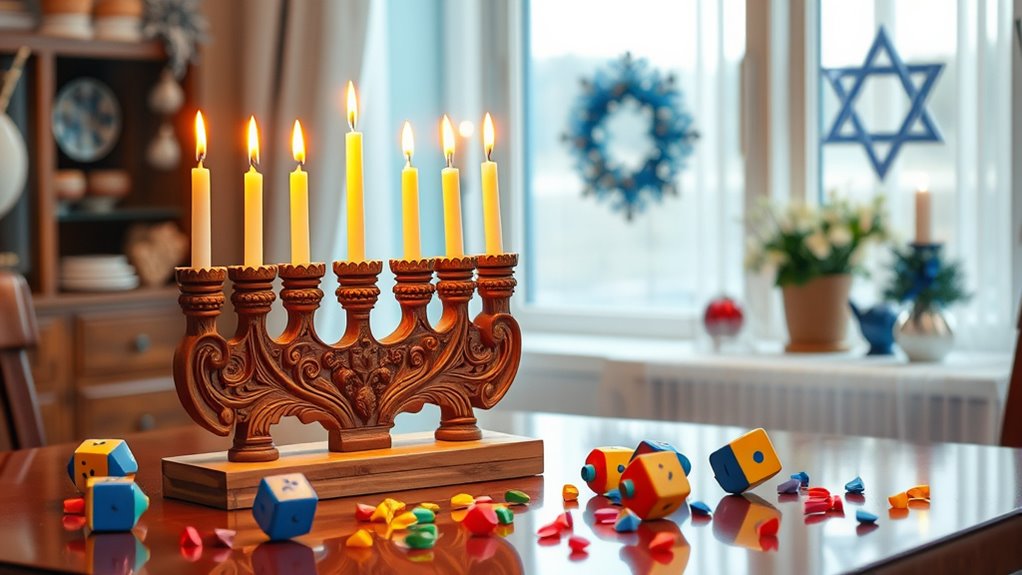

Hanukkah celebrates the miracle of light and Jewish resilience by commemorating the rededication of the Second Temple in Jerusalem. You’ll participate in lighting a Menorah each night, adding a candle for eight days, symbolizing hope and perseverance. Playing the dreidel game with gelt fosters family bonding and cultural tradition. These rituals connect you to centuries of history, emphasizing faith, renewal, and community. Explore further to uncover more about this meaningful Festival of Lights.
Key Takeaways
- Hanukkah celebrates the rededication of the Second Temple and commemorates a historical miracle of light lasting eight days.
- The central tradition involves lighting a Menorah, adding one candle each night to symbolize hope and perseverance.
- Playing dreidel, a spinning top game, reinforces cultural heritage and the story of Jewish resilience.
- Rituals like lighting the menorah and spinning the dreidel foster family bonding and community spirit.
- Hanukkah embodies themes of resilience, hope, and cultural pride, passing traditions and stories across generations.

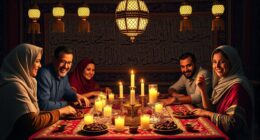
Have you ever wondered what Hanukkah is all about? This vibrant festival, also called the Festival of Lights, celebrates a historical miracle and the triumph of light over darkness. At its core, Hanukkah is about remembering the rededication of the Second Temple in Jerusalem and the miraculous event that took place. When you participate in the traditional Menorah lighting, you’re symbolically relighting hope and perseverance. Each night, you add a new candle to the menorah, culminating in eight candles plus the shamash, the helper candle used to light the others. This act isn’t just about illumination; it’s a reminder of the resilience and faith that sustained the Jewish people through difficult times. As you gather with loved ones to light the menorah, the warm glow creates a sense of unity and tradition that spans generations.
Alongside the Menorah lighting, the dreidel game is a beloved Hanukkah activity that adds fun and excitement to the celebration. The dreidel is a spinning top with four sides, each marked with a Hebrew letter—Nun, Gimel, Hei, and Shin—that stand for the phrase “Nes Gadol Haya Sham,” meaning “A great miracle happened there.” As you spin the dreidel, you engage in a game that has been played for centuries. It’s simple yet entertaining, often played with chocolate coins called gelt, which symbolize prosperity and good fortune. The game encourages friendly competition and brings everyone together, especially kids enthusiastic to win the gelt or simply enjoy the spinning action. Playing the dreidel game isn’t just about fun; it’s a way to connect with history and keep cultural traditions alive. Additionally, the use of traditional symbols and storytelling during the game helps reinforce the historical significance of the holiday and its cultural heritage.
During Hanukkah, these rituals become more than just customs—they’re meaningful acts that reinforce your connection to your heritage. Lighting the menorah each night reminds you of perseverance and light overcoming darkness, while spinning the dreidel keeps the spirit of celebration and community alive. Whether you’re sharing these traditions with family or friends, they serve as a bridge to the past and a way to pass on stories and values. Hanukkah’s warmth, joy, and symbolism make it a special time to reflect on resilience and renewal. By engaging in these traditions, you participate in a centuries-old story that continues to inspire hope and unity. So, as you light the menorah and spin the dreidel, you’re not just celebrating history—you’re creating new memories rooted in faith and tradition.
Frequently Asked Questions
How Do Different Jewish Communities Celebrate Hanukkah Uniquely?
You’ll find that different Jewish communities celebrate Hanukkah with unique cultural variations and community celebrations. Some light menorahs with special prayers, while others include lively music, dancing, or traditional foods. In certain areas, you might see public menorah lightings or community events that bring everyone together. These diverse customs reflect local traditions and a shared joy, making each Hanukkah celebration special and meaningful in its own way.
What Are the Origins of the Menorah’s Nine Branches?
You’re about to uncover a meaningful symbol—the menorah’s nine branches, each representing a special part of Jewish history. Its nine branches symbolize the menorah’s historical significance during Hanukkah, with one candle, the shamash, used to light the other eight. This arrangement highlights hope, perseverance, and faith, blending beautiful symbolism with deep tradition. The menorah’s design reminds you of the miracle that inspired this joyful celebration.
Are There Any Modern Reinterpretations of Traditional Hanukkah Customs?
You’ll find many modern reinterpretations of traditional Hanukkah customs through digital adaptations and contemporary reinterpretations. For example, families share virtual menorah lightings, and social media campaigns spread the holiday’s message. Some communities incorporate new symbols or modern art into their celebrations, blending tradition with innovation. These adaptations help keep the spirit of Hanukkah alive, making it more inclusive and engaging for people of all ages and backgrounds today.
How Has Hanukkah Evolved in Non-Israeli Cultures?
You’ll see Hanukkah evolve in non-Israeli cultures through secular adaptations and cultural influences. Celebrations often blend traditional customs with local practices, like public menorah lightings, community events, or incorporating new foods. These adaptations help make the holiday more inclusive and meaningful across diverse societies. As a result, Hanukkah becomes a vibrant, multifaceted festival that reflects both its historical roots and the unique cultural identities of each community.
What Are Some Lesser-Known Hanukkah Legends and Stories?
You’ll find that some lesser-known Hanukkah legends include miracle stories like the oil lasting eight days, which isn’t always highlighted. Hidden symbols, such as the dreidel’s letters, represent deeper themes of faith and resilience. These stories and symbols often carry powerful messages beyond the traditional narratives, reminding you of the enduring spirit of Hanukkah and the miracles that continue to inspire generations.
Conclusion
As you celebrate Hanukkah, think of it as tending a shining flame that grows brighter each night. The traditions and history weave together like a tapestry of resilience and hope, illuminating your heart just as the menorah lights up the darkness. Embrace these moments with joy and reflection, knowing you’re part of a timeless story. Let the Festival of Lights inspire you to keep your own inner flame burning bright, guiding you through every season.