

Santa Claus evolved from Saint Nicholas, a generous bishop known for kindness and charity in Turkey. Over time, stories merged with local traditions and were shaped by artists and poets, creating his cheerful, jolly image, complete with a red suit and white beard. Mass media cemented his worldwide popularity, transforming him into a symbol of joy, gift-giving, and holiday spirit. If you keep exploring, you’ll discover how this beloved figure became the legendary icon we celebrate today.
Key Takeaways
- Santa Claus originated from Saint Nicholas, a generous bishop known for acts of kindness and charity in Turkey.
- His image evolved through 19th-century literature and art, transforming into a cheerful, jolly figure with a distinctive red suit.
- Cultural stories merged with local traditions, adding elements like reindeer, a North Pole workshop, and gift-giving rituals.
- Mass media and popular culture solidified Santa’s modern image as a joyful, recognizable symbol of Christmas worldwide.
- Today’s Santa embodies generosity and holiday spirit, blending historical roots, folklore, and cultural adaptations over centuries.
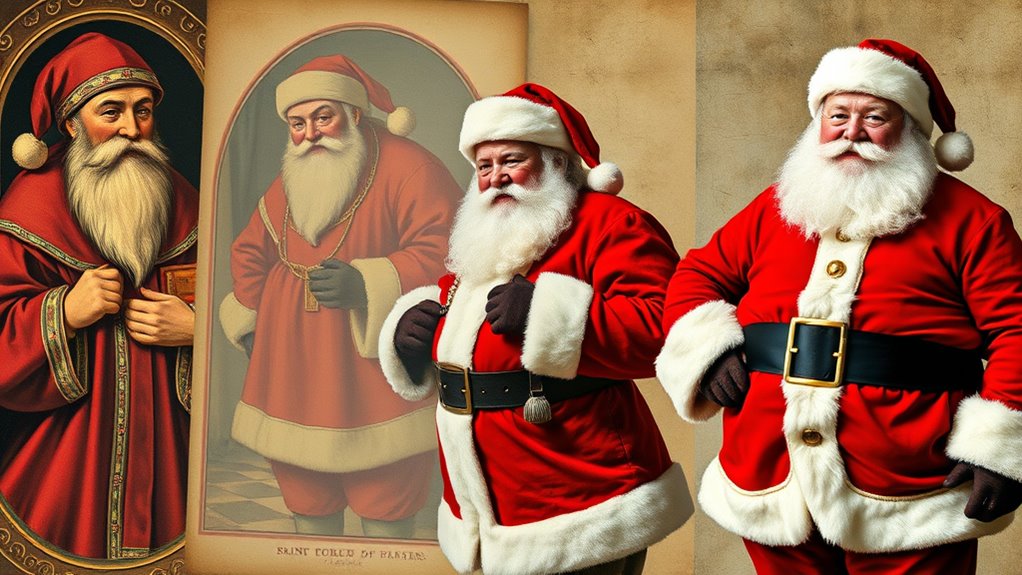
Have you ever wondered how Santa Claus transformed from a historical figure into the jolly icon we are familiar with today? It all begins with Santa’s historical origins, rooted in the real Saint Nicholas, a kind-hearted bishop from what is now Turkey. Known for his generosity, he famously gave gifts to the poor and secretly helped those in need. Over centuries, stories of his kindness spread across Europe, and he became a symbol of charity and goodwill. These tales laid the foundation for the legendary figure that would eventually become Santa Claus.
Santa’s origins trace back to Saint Nicholas, a generous bishop from Turkey celebrated for his kindness and charity.
As these stories traveled and merged with local traditions, Santa’s image started to evolve. By the 19th century, poets and artists shaped what we now recognize as modern Santa imagery. Clement Clarke Moore’s 1823 poem, “A Visit from St. Nicholas,” or “The Night Before Christmas,” played a *vital* role, describing Santa as a jolly, plump man with a twinkling eye, dressed in fur-lined red attire. This depiction was further popularized by Thomas Nast, a talented cartoonist whose illustrations in the late 1800s cemented Santa’s cheerful face, rosy cheeks, and iconic outfit. These images transformed Santa from a religious figure into a universal symbol of Christmas cheer, emphasizing joy, generosity, and merriment.
The shift from Santa’s religious origins to his modern persona wasn’t just about appearance; it also involved changing his story. Originally, Saint Nicholas was a saint celebrated for his acts of kindness. Over time, especially in American culture, Santa became a figure who personally delivers gifts to children, embodying the spirit of giving. The image of Santa’s North Pole workshop, his team of flying reindeer, and his secretive gift-giving all emerged from this cultural evolution. These elements help create the magic around Santa that captivates children and adults alike, making him a central figure in Christmas celebrations worldwide. Additionally, advances in mass media helped solidify and spread Santa’s image globally, ensuring his place in modern holiday traditions.
Today, the modern Santa imagery is so pervasive that it’s hard to imagine Christmas without him. His red suit, white beard, jolly laugh, and gift sack are instantly recognizable symbols. Yet, behind this cheerful image lies a rich history that stretches back centuries, blending religious roots with folklore and popular culture. You now see Santa as a symbol of generosity, kindness, and holiday spirit, but it’s fascinating to remember how he’s evolved over time—from a saintly figure to the joyful, plump man in a red suit who brings festive cheer to millions every year.

Uten 12" Santa Claus Decorations, Christmas Standing Figurine with Gifts Bag and Bell for New Year Christmas Decoration Navidad Natal Gifts.
🎅Christmas decorations★Lovely Look: The classic Santa Claus Figurines with a big white beard is wearing his long red…
As an affiliate, we earn on qualifying purchases.
As an affiliate, we earn on qualifying purchases.
Frequently Asked Questions
How Did Santa’s Reindeer Become Part of the Legend?
You see, Santa’s reindeer became part of the legend through reindeer mythology and gift-giving traditions. In the 1823 poem “A Visit from St. Nicholas,” the author describes Santa’s sleigh pulled by eight reindeer, which popularized the idea. These mythical creatures symbolize speed and magic, helping Santa deliver gifts worldwide overnight. Over time, the reindeer myth grew, becoming a essential part of Santa’s enchanting story and holiday cheer.
What Are the Origins of Santa’s Iconic Red Suit?
You might think Santa’s red suit is just a modern choice, but its origins lie in historical costumes and cultural symbols. In the 1930s, Coca-Cola popularized the bright red outfit through advertising, solidifying it as Santa’s iconic look. Before that, Santa’s attire varied, but the red suit now symbolizes warmth, generosity, and holiday cheer. This color’s deep roots in tradition and marketing helped make Santa instantly recognizable worldwide.
How Did Santa’s Image Spread Globally?
You see, Santa’s image spread globally through holiday traditions and cultural adaptations, helped by popular media like books, movies, and advertisements. As different countries embraced Christmas, they adapted Santa’s image to suit their own customs, making him a universal symbol of giving and joy. This continuous cultural exchange allowed Santa to become an iconic figure worldwide, blending local traditions with the familiar image we recognize today.
Are There Regional Variations of Santa Claus?
Yes, there are regional variations of Santa Claus. You’ll notice different cultural adaptations and regional folklore shaping his appearance and traditions. In some places, he’s a jolly, red-suited man, while in others, he’s more of a gift-bringer or combines local customs. These variations reflect local stories, climate, and history, allowing Santa to connect uniquely with each community. This diversity enriches the global Santa tradition, making it more inclusive and vibrant.
How Has Commercialism Influenced Santa’s Evolution?
Commercialism has profoundly shaped Santa’s evolution by integrating marketing strategies that boost consumer culture. You see, advertisers highlight Santa’s jolly image to sell everything from toys to holiday decor, reinforcing his role in holiday shopping. This commercial influence turns Santa into a symbol of consumerism, making him not just a Christmas figure but also a marketing tool that drives holiday sales, ultimately blending tradition with modern consumer culture.

Potalay Men's Deluxe Santa Suit 11pc. Christmas Adult Santa Claus Costume (X-Large)
HIGH-QUALITY MATERlAL – Made of red velvet & white plush material. This deluxe Santa Claus Costume is comfortable…
As an affiliate, we earn on qualifying purchases.
As an affiliate, we earn on qualifying purchases.
Conclusion
As you embrace Santa’s story, remember he’s more than a jolly figure—he’s a symbol of generosity, hope, and kindness that lives within us all. His evolving image mirrors our changing world, reminding you that the true gift lies in the spirit you share. Keep his legacy alive by embodying that warmth and compassion, allowing the symbol of Santa to remind you of the power of giving and the magic of believing.

Bearington Nick Santa Claus Christmas Stuffed Animals – 6" Soft Christmas Stuffies for Kids with Red and White Hat, Soft Fur, and Weighted Bottom – Poseable Holiday Plush Toy – Gift for Teens and Kids
Adorable Plushie: Delight in the festive spirit with our adorably cute, 6-inch-tall Baby Nick Santa Claus plush toy!…
As an affiliate, we earn on qualifying purchases.
As an affiliate, we earn on qualifying purchases.

LEGO Santa's Sleigh – Building Toys for Kids, Boys & Girls, Ages 9+ – Indoor Christmas Decorations for Home W/Santa Claus Figurine & Reindeer – Gifts for Boys & Girls – 40499
Lego Santas Sleigh (40499 – 343 pcs)
As an affiliate, we earn on qualifying purchases.
As an affiliate, we earn on qualifying purchases.