
To honor the seven principles of Kwanzaa, incorporate cultural symbols like the kinara on a mkeka, and reflect on each principle through candle lighting rituals. Engage in storytelling, singing, or dancing to connect with African heritage and traditions. Celebrate community by sharing food, stories, or creative expressions rooted in African history and resilience. Focusing on these meaningful practices deepens your understanding and appreciation—continue exploring to discover how to make your celebration truly impactful.
Key Takeaways
- Light the candles on the kinara each night, reflecting on the meaning of each of the seven principles.
- Incorporate African symbols like mkeka mats, baskets, and artwork to honor cultural heritage.
- Share stories, songs, or dances related to African history and values during the celebration.
- Emphasize themes of community, resilience, and cultural pride in all rituals and activities.
- Use eco-friendly practices and community-focused actions to connect with sustainability and collective growth.

Are you looking to celebrate Kwanzaa in a meaningful way? If so, understanding the roots of this holiday helps you connect more deeply to its purpose. Kwanzaa is rooted in African traditions, which emphasize community, heritage, and spiritual values. One of the most powerful ways to honor these roots is by incorporating cultural symbols that reflect the history and beliefs of African peoples. These symbols aren’t just decorative; they serve as reminders of your cultural identity and the principles that guide the holiday.
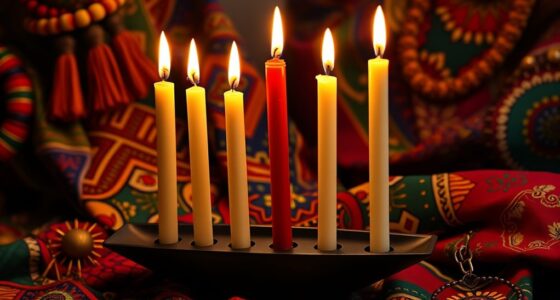
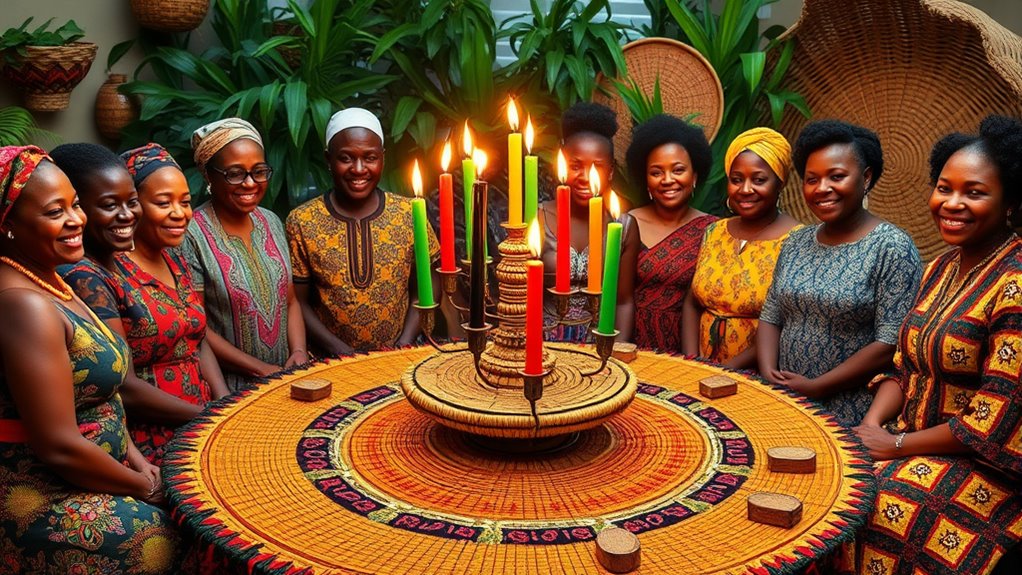
When you set up your Kwanzaa display, start with the kinara, a candleholder that holds seven candles. Each candle represents one of the seven principles— Umoja (Unity), Kujichagulia (Self-Determination), Ujima (Collective Work and Responsibility), Ujamaa (Cooperative Economics), Nia (Purpose), Kuumba (Creativity), and Imani (Faith). The colors of the candles—red, black, and green—are also significant cultural symbols, representing the struggles, the people, and the hope for the future. Red symbolizes the bloodshed for liberation, black stands for the people, and green signifies growth and future prosperity. Incorporating these symbols into your celebration helps you focus on each principle’s importance and keeps the meaning front and center.
You’ll find that many Kwanzaa celebrations include the use of woven mats, called mkeka, which symbolize tradition and respect for African heritage. Placing the kinara on the mkeka creates a visual connection to the continent’s cultural symbols and traditions. You might also include baskets, crops, or artwork inspired by African motifs to further emphasize the connection to African culture. These symbols serve as a visual reminder of the history and resilience of African ancestors, fostering a sense of pride and continuity.
Lighting the candles on each night of Kwanzaa is more than a ritual; it’s a moment to reflect on each principle deeply rooted in African traditions. As you light each candle, consider its significance and how it applies to your life and community. Sharing stories, songs, or dance inspired by African heritage can deepen your understanding and appreciation of these cultural symbols. Recognizing that electricity production from bike generators can be a sustainable energy practice, you might incorporate eco-friendly ideas into your celebration to honor future generations. By intentionally using these symbols and traditions, you honor the history and values that make Kwanzaa a powerful celebration of African identity and unity. This approach not only enriches your holiday experience but also strengthens your connection to your roots and community.
Top picks for "kwanzaa celebration honor"
Open Amazon search results for this keyword.
As an affiliate, we earn on qualifying purchases.
Frequently Asked Questions
What Are Traditional Foods Served During Kwanzaa?
During Kwanzaa, you might serve traditional foods like sweet potatoes, collard greens, and cornbread, which hold cultural significance and connect to African heritage. These traditional recipes celebrate your roots and community, emphasizing unity and gratitude. You can also include dishes like yam pie or fried plantains, enriching your celebration with flavors that honor your history. These foods help deepen your understanding of the cultural significance behind Kwanzaa.
How Can Children Participate in Kwanzaa Celebrations?
Did you know that over 60% of Kwanzaa celebrations involve children actively? You can involve kids by encouraging their participation in children’s crafts that reflect the Seven Principles, like making kinara decorations or poster boards. Storytelling activities also help them grasp Kwanzaa’s meaning, allowing children to share their own stories or learn about African heritage. This hands-on approach makes the celebration meaningful and engaging for young ones.
Are There Specific Songs or Music Associated With Kwanzaa?
You can enjoy specific songs or music associated with Kwanzaa by embracing African rhythms and cultural melodies. Many communities incorporate traditional drumming, chants, and songs that celebrate African heritage and the principles of Kwanzaa. You might also find modern interpretations blending these rhythms with contemporary music. Participating in singing or playing instruments during Kwanzaa events helps deepen your connection to the celebration and honors its cultural significance.
Can Non-African Americans Celebrate Kwanzaa?
Yes, you can absolutely celebrate Kwanzaa. Its cultural significance extends beyond African Americans, emphasizing values like unity and community. Your inclusive participation honors these principles and enriches the celebration. Embrace the spirit of togetherness, learn about its history, and share in the festivities. By doing so, you help nurture understanding and respect, making Kwanzaa a meaningful experience for everyone willing to participate and honor its deep cultural roots.
What Are Common Decorations Used During Kwanzaa?
During Kwanzaa, you use cultural symbols and decorative crafts to celebrate. Common decorations include the kinara, which holds seven candles representing the Seven Principles. You might also display mkeka mats, vibrant African fabrics, woven baskets, and symbolic objects like unity cups and crops. These decorations help create a meaningful atmosphere, honoring African heritage and fostering community spirit throughout the week-long celebration.
Conclusion
As you embrace the spirit of Kwanzaa, remember it’s like tending a garden—each principle is a seed that, when nurtured, blooms into a stronger sense of community and identity. I once watched my neighbor decorate her home with symbols of Kwanzaa, feeling how her pride and unity grew brighter with each tradition. By honoring these principles, you’re planting your own rich harvest of culture, connection, and hope that can flourish all year long.