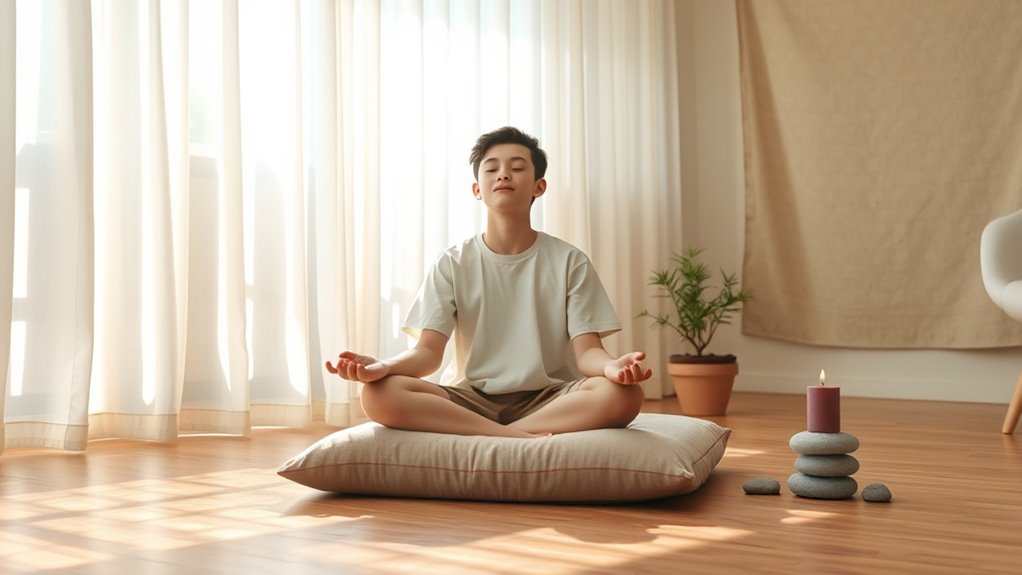

Starting meditation is simple and accessible for everyone. Begin with slow, deep breaths, focusing on your inhalations and exhalations to settle your mind. Find a comfortable posture—sit or lie down—that supports relaxed awareness. Keep your practice consistent, even if it’s just a few minutes daily, and gradually increase it. As you build your routine, you’ll discover easy techniques to deepen your calmness. Stay with it, and you’ll find even more helpful tips along the way.
Key Takeaways
- Start with simple breathing exercises, focusing on slow, deep inhales and exhales to settle into mindfulness.
- Choose a comfortable, upright posture that supports relaxed alertness, such as sitting on a chair or cross-legged.
- Use techniques like counting breaths or box breathing to anchor attention and reduce wandering thoughts.
- Establish a consistent routine by practicing daily, starting with brief sessions and gradually increasing duration.
- Focus on building a sustainable practice over perfection, emphasizing comfort, patience, and mindfulness integration.
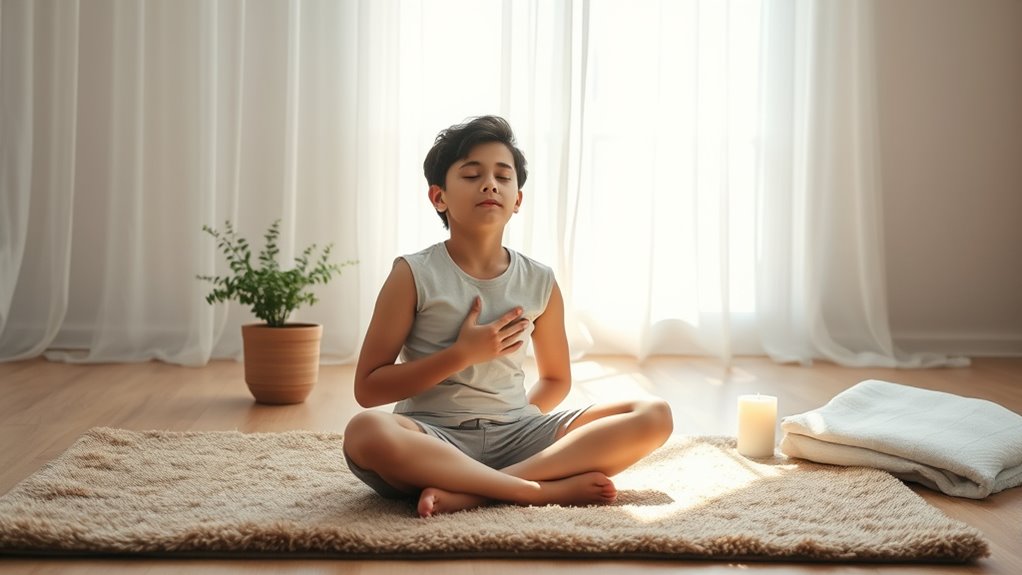
Meditation can seem intimidating at first, but anyone can learn to incorporate it into their daily routine with simple steps. The key is starting slow and building consistency. To begin, focus on breathing techniques that help you settle into a calm state. You don’t need complicated methods—just take slow, deep breaths, inhaling through your nose and exhaling through your mouth. As you breathe, pay attention to the sensation of the air entering and leaving your body. This simple practice anchors your mind and helps reduce stress. Over time, you’ll notice that controlled breathing becomes second nature, making it easier to stay present during meditation sessions. Incorporating mindfulness into your practice can enhance your awareness and deepen your experience.
Choosing the right meditation postures is also essential, especially when you’re just starting out. You can sit on a chair with your feet flat on the ground, cross-legged on a cushion, or even lie down if that’s more comfortable. The goal is to find a position that keeps your back straight but relaxed, so you don’t feel tense or sleepy. Keep your shoulders relaxed and your hands resting naturally on your lap or knees. Maintaining good posture supports steady breathing and helps you stay alert during your practice. Remember, there’s no perfect pose—comfort and stability are the priorities. Experiment with different postures until you find what works best for you, so meditation becomes a sustainable habit rather than a chore.
Once you’ve settled into a comfortable posture, focus on your breath. Use breathing techniques such as counting each inhale and exhale or practicing box breathing—inhale for four seconds, hold for four, exhale for four, and hold again for four seconds. These techniques deepen your awareness of your breath and prevent your mind from wandering. If your thoughts drift, gently guide your focus back to your breathing without judgment. Consistency is more important than duration—start with just five minutes daily, then gradually increase as you become more comfortable.

Retrospec Sedona Zafu Meditation Cushion with Buckwheat Hull Fill – Adjustable Yoga & Pilates Equipment Support – 17in Crescent Cotton Cover
NATURAL COMFORT & SUPPORT: Filled with sustainable buckwheat hulls, this meditation cushion elevates your practice by aligning your…
As an affiliate, we earn on qualifying purchases.
As an affiliate, we earn on qualifying purchases.
Frequently Asked Questions
Can Meditation Help Improve Sleep Quality?
Yes, meditation can profoundly improve your sleep quality. It enhances sleep hygiene by helping you establish a calming pre-sleep routine. Using relaxation techniques like deep breathing or body scans, you reduce stress and anxiety that interfere with sleep. Regular meditation trains your mind to relax more easily, making it easier to fall asleep and stay asleep longer. Incorporate these practices into your nightly routine for better rest and overall well-being.
Is Meditation Suitable for Children and Teenagers?
Yes, meditation is suitable for children and teenagers. You can introduce child-friendly meditation and meditation for teens to help them manage stress, improve focus, and develop emotional resilience. Keep sessions short and engaging, using simple breathing exercises or guided imagery. By making meditation fun and accessible, you encourage kids to build healthy mindfulness habits that support their mental well-being and overall development.
How Long Should Beginners Meditate Daily?
Start small and stay steady—aim for just five to ten minutes daily. You should gradually increase your meditation duration as comfort grows, but consistency trumps length. Daily practice length isn’t about pushing limits but about building a sustainable routine. By dedicating even a brief daily burst, you’ll develop discipline and discover the deep benefits of mindfulness, making meditation a manageable, meaningful part of your everyday life.
Are There Any Health Risks Associated With Meditation?
You might wonder if there are health concerns or meditation side effects. Generally, meditation is safe for most people, but some may experience discomfort, anxiety, or dizziness if they force themselves or meditate intensely. To avoid these issues, start slowly, listen to your body, and consult a healthcare professional if you have existing health concerns. Being mindful and gentle with your practice minimizes potential side effects.
Can Meditation Replace Traditional Therapy or Medication?
Meditation can be a helpful therapy alternative, but it shouldn’t replace traditional therapy or medication without consulting a healthcare professional. While meditation vs medication offers benefits like stress reduction and improved focus, severe mental health conditions often require medical treatment. Use meditation as a complementary practice alongside therapy or medication, not as a substitute, especially for serious issues. Always seek professional advice to determine the best approach for your mental health.

Mindsight 'Breathing Buddha' Guided Visual Meditation Tool for Mindfulness | Slow Your Breathing & Calm Your Mind for Stress & Anxiety Relief | Perfect for Adults & Kids (Multicolor, Pebble (Sound))
🧠 Introducing (6) Ambient Nature Sounds: the addition of crashing waves, birds chirping or a strong breeze can…
As an affiliate, we earn on qualifying purchases.
As an affiliate, we earn on qualifying purchases.
Conclusion
Remember, Rome wasn’t built in a day. As you start your meditation journey, be patient and gentle with yourself. Consistent practice, even if just for a few minutes each day, will gradually bring clarity and calm into your life. Keep an open mind and stay committed. Over time, you’ll notice the positive changes unfold. Trust the process, and soon you’ll see that small steps lead to big transformations.

Incentive Spirometer Adult, Breathing Exercise Device for Lungs, Breathing Trainer
INCENTIVE SPIROEMTER
As an affiliate, we earn on qualifying purchases.
As an affiliate, we earn on qualifying purchases.

Pinmoco Ergonomic Cross Legged Chair, 360° Swivel Meditation Chair with Wheels, Height Adjustable Seat for ADHD, Strong Lumbar Support, Chic Home Office Furniture, Teddy Fabric, Off White
【Ergonomic Support】 The ergonomic cross-legged office chair features a thickened crescent-shaped backrest that provides perfect lumbar support, enhancing…
As an affiliate, we earn on qualifying purchases.
As an affiliate, we earn on qualifying purchases.