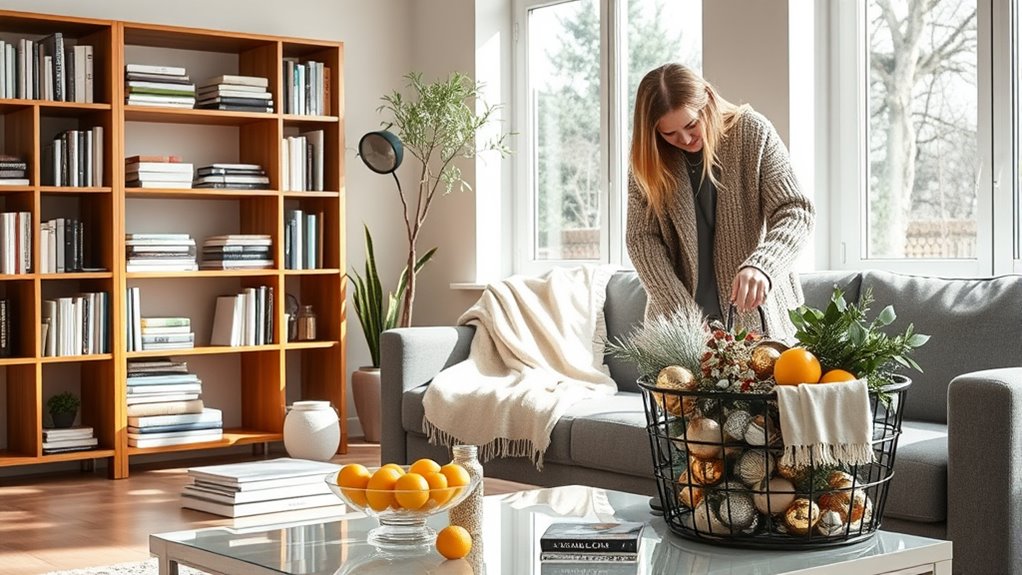

Starting the new year by decluttering your home can help refresh both your space and your mind. Removing unnecessary items reduces chaos, making your environment more peaceful and focused. It boosts mental clarity, lowers stress, and encourages a sense of control. Establishing simple routines keeps your space organized long-term. When you create a tidy, intentional environment, you set a positive tone for the months ahead. Keep going to discover effective tips that will help you sustain your progress effortlessly.

Get the little things that make your day delivered free with Prime
- Fast, free delivery on millions of items
- Prime Video, Amazon Music and more included
- Member-only deals all year
Key Takeaways
- Use categorization and decision-making to effectively declutter clothes, papers, and household items for a fresh start.
- Incorporate daily routines like sorting mail and putting items away to maintain organization.
- Practice mental clarity techniques, such as mindfulness or journaling, to enhance focus during decluttering.
- View decluttering as a self-care act to reduce stress and promote emotional well-being in the new year.
- Establish long-term habits to sustain a tidy environment, supporting ongoing mental clarity and life balance.

Have you ever noticed how a cluttered home can weigh on your mind? When your space is full of unnecessary items and chaos, it’s easy to feel overwhelmed and distracted. Decluttering isn’t just about tidying up; it’s about creating a peaceful environment that promotes mental clarity and focus. To do this effectively, you need to implement organizational strategies that streamline your belongings and improve your overall living space. Start by categorizing items—clothes, papers, kitchenware—and decide what to keep, donate, or discard. This clear system helps prevent clutter from piling up again and keeps you motivated. As you work through each area, remember that consistency is key. Dedicate a few minutes each day to maintaining your space, so clutter doesn’t accumulate and undo your progress.
In addition to physical organization, mental clarity techniques play a crucial role in your decluttering journey. Take moments to pause and reflect on how your environment affects your mood and productivity. Clearing your space can considerably reduce stress and increase your sense of control. Incorporate simple practices such as deep breathing, mindfulness, or journaling to enhance your mental focus. These techniques help you stay motivated and centered throughout the process, making it easier to let go of items that no longer serve you. As you gain control over your physical surroundings, you’ll notice your mind becomes clearer, allowing you to prioritize what truly matters and set achievable goals. Moreover, understanding the importance of home organization and its impact on mental health can motivate you to maintain your decluttering efforts in the long run.
Remember that decluttering isn’t a one-time task but a continuous process. Establish routines that support your organizational strategies, like sorting mail immediately or putting away items after use. These habits help prevent messes from building up and keep your space—and mind—organized. As you see your home transform into a calm, orderly environment, you’ll experience a similar shift internally. You’ll feel lighter, more focused, and better equipped to handle daily challenges. Embrace the process as an act of self-care, knowing that a tidy home directly contributes to a clearer, more relaxed mind. With patience and persistence, your decluttering efforts will not only refresh your living space but will also set the tone for a more intentional, balanced year ahead.
As an affiliate, we earn on qualifying purchases.
Frequently Asked Questions
How Often Should I Declutter to Maintain a Clutter-Free Home?
You should declutter every three to six months to keep your home clutter-free. Regularly assess your space and use storage solutions to organize belongings efficiently. When you find items you no longer need, follow donation tips to give them a new life. Staying consistent with these habits prevents clutter from piling up, making maintenance easier and creating a more peaceful environment that supports your well-being.
What Are the Best Tools for Effective Decluttering?
You should use effective storage solutions and organizational tools like labeled bins, stackable drawers, and clear containers to declutter efficiently. A good vacuum or handheld cleaner helps quickly tidy surfaces, while collapsible storage boxes save space. Consider investing in drawer dividers and wall-mounted shelves to maximize organization. These tools make sorting, storing, and maintaining a clutter-free home easier, ensuring your space stays tidy and functional.
How Can I Stay Motivated During a Decluttering Project?
Did you know that 80% of what you own is rarely used? To stay motivated, try setting small, achievable goals and celebrate each victory. Use motivational strategies like visualizing your clutter-free space and tracking your progress. Decluttering accountability partners can also keep you committed. When you share your goals and progress, you’re more likely to stay focused and motivated throughout your decluttering project.
Can Decluttering Improve My Mental Health Long-Term?
Yes, decluttering can boost your long-term mental health. When you clear physical space, you create room for mindfulness practices, which reduce stress and promote emotional well-being. As you organize, you gain a sense of control and accomplishment, strengthening your resilience. Regular decluttering helps maintain a calm environment, making it easier to manage everyday challenges and foster a positive mindset, benefiting your mental health over time.
What Are Eco-Friendly Ways to Dispose of Unwanted Items?
You can dispose of unwanted items eco-friendly by exploring recycling options for electronics, plastics, and metals, ensuring they don’t end up in landfills. Additionally, consider donating items like clothes, furniture, or books to donation centers; they’ll find new homes and reduce waste. Always check local guidelines for recycling and donation centers’ accepted items. This way, you help protect the environment while giving your belongings a second chance.
As an affiliate, we earn on qualifying purchases.
Conclusion
As you declutter your home and mind, remember that studies show clutter can increase stress and decrease productivity. Clearing your space isn’t just about tidiness—it’s about creating a calm, focused mindset for the year ahead. Embrace this fresh start and enjoy the mental clarity that comes with a simplified environment. You have the power to transform your space and your life—so take that first step today and make this year your best yet.
As an affiliate, we earn on qualifying purchases.
As an affiliate, we earn on qualifying purchases.
Halloween Picks
halloween
As an affiliate, we earn on qualifying purchases.