
Makar Sankranti and Pongal are lively festivals that celebrate India’s harvest season, filled with colorful traditions, kite flying, and festive foods. You’ll enjoy vibrant community gatherings, flying kites high in the sky, and sharing sweet treats like jaggery, sesame, and rice dishes. These festivals highlight gratitude for nature’s bounty, foster unity, and symbolize new beginnings. Keep exploring to discover more about how these celebrations deepen cultural bonds across India.
Key Takeaways
- Makar Sankranti and Pongal mark India’s harvest season, celebrating gratitude for nature’s bounty through vibrant festivals and community activities.
- Traditional kite flying symbolizes aspirations and unity, with colorful kites soaring high during these festivities.
- Festive foods like sweet ladoos and savory rice dishes reflect prosperity, health, and cultural heritage.
- Sharing special foods and participating in rituals strengthen community bonds and honor agricultural traditions.
- The festivals foster a joyful atmosphere that emphasizes gratitude, new beginnings, and a deep connection to nature.
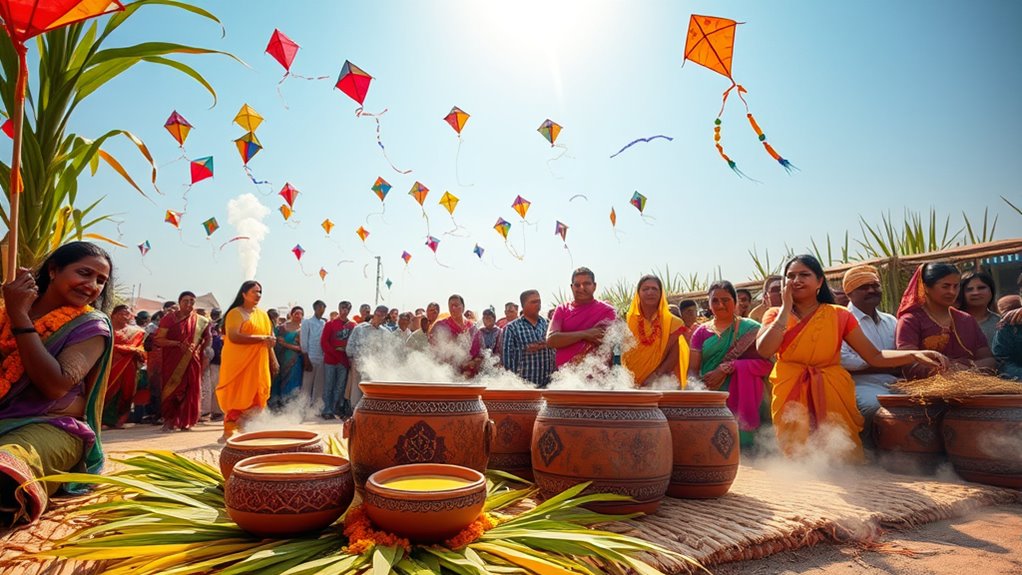
Are you curious about the vibrant festivals of Makar Sankranti and Pongal? These celebrations mark the harvest season and are rich in traditions that bring communities together. One of the most exciting aspects of these festivals is traditional kite flying. As you step out into the open sky, you’ll see colorful kites soaring high, creating a lively tapestry against the blue backdrop. Flying kites isn’t just about fun; it symbolizes reaching for the sun and new beginnings. You might find yourself competing with neighbors or friends, trying to cut each other’s kites down in friendly rivalry. The thrill of catching the wind and maneuvering your kite with skill adds a sense of joy and accomplishment. It’s a tradition that unites people of all ages, turning the sky into a canvas of vibrant colors and movement. Alongside the kite flying, you’ll indulge in an array of harvest festival foods that celebrate the bounty of the season. Sweet treats like jaggery, sesame, and peanut ladoos are common, representing the sweetness of life and gratitude for the harvest. Savory dishes such as rice-based delicacies, spicy chutneys, and fresh vegetable offerings are also part of the festivities. Preparing and sharing these foods fosters a sense of community and gratitude. The aroma of freshly cooked foods fills the air, inviting everyone to gather around and enjoy the feast together. During Makar Sankranti and Pongal, kitchens become lively hubs of activity, with families coming together to cook traditional recipes that have been passed down through generations. The significance of these festival foods goes beyond nourishment; they symbolize prosperity, health, and the appreciation of nature’s gifts. As you partake in these culinary traditions, you’ll notice how each dish holds cultural meaning, connecting you to centuries of harvest celebrations. Whether it’s a simple sweet or a hearty meal, every bite reminds you of the importance of gratitude and community in these festivals. The vibrant atmosphere, combined with the excitement of kite flying and the warmth of shared foods, creates a festive spirit that’s hard to forget. These customs serve as a reminder of the close bond between humans and nature, emphasizing gratitude for the harvest and hope for future prosperity. So, as you celebrate Makar Sankranti and Pongal, embrace the joy of traditional kite flying and savor the rich harvest festival foods. Let these traditions inspire you to connect with your community, appreciate nature’s bounty, and welcome new beginnings with hope and gratitude.

SiliFine 2 Pcs Modak Mould Metal Modak Kachori Maker Mold Indian Kachori Sancha Small and Medium Stainless Steel Fold Mould Indian Return Gifts for Pooja, Ganpati, Diwali, Dasra(2.5inch, 1.97inch)
Packing List: our package includes 2 modak mould of different sizes; This means you get two durable, moulds…
As an affiliate, we earn on qualifying purchases.
As an affiliate, we earn on qualifying purchases.
Frequently Asked Questions
How Do Different Regions Celebrate Makar Sankranti and Pongal Uniquely?
You’ll notice that different regions celebrate Makar Sankranti and Pongal uniquely, often showcasing regional dance forms like Bihu and Bhangra. You might attend vibrant art exhibitions displaying local crafts and traditions. In South India, Pongal features elaborate cooking and prayers, while in Punjab, kite flying is popular. Each region adds its own flavor through dance, music, and art, making these festivals a rich tapestry of India’s diverse cultural heritage.
What Are the Traditional Foods Prepared During These Festivals?
During these festivals, you prepare delicious traditional foods like sweets and desserts such as tilgul, gud gud, and jaggery-based treats. You also enjoy festive snacks like sesame and peanut chikkis, colorful sakkarai pongal, and sweet rice dishes. These foods symbolize prosperity and gratitude for the harvest. You’ll find that each region offers its own unique delicacies, making the celebrations flavorful and memorable.
How Do These Festivals Influence Local Agricultural Practices?
Imagine these festivals as guiding stars that steer your farming practices. They inspire you to embrace crop rotation, ensuring soil stays fertile and healthy, and to practice water conservation, crucial in dry seasons. These celebrations serve as reminders to align your agricultural methods with nature’s rhythms, promoting sustainability. By honoring tradition, you foster a resilient farm that thrives season after season, honoring both history and the environment.
Are There Any Specific Rituals or Customs for Children?
During Makar Sankranti and Pongal, children participate in exciting rituals like kite flying and children’s games. You’ll see kids joyfully flying colorful kites, trying to cut each other’s strings, and playing traditional games that bring everyone together. These customs help children connect with cultural roots while having fun. The festivals create memorable moments for children, fostering community spirit and celebrating the harvest season through lively activities.
How Has Modern Culture Impacted Traditional Celebrations?
Ever wonder how modern culture shapes traditional celebrations? Digital influence and urban adaptation have transformed these festivals, making them more accessible but less rooted in customs. You might find more celebrations online or in city spaces rather than rural areas. While this broadens participation, it can also dilute the original rituals. Do you think preserving authenticity matters as traditions evolve to fit modern lifestyles?

AROMA Digital Rice Cooker, 4-Cup (Uncooked) / 8-Cup (Cooked), Steamer, Grain Cooker, Multicooker, 2 Qt, Stainless Steel Exterior, ARC-914SBD
Easy-to-use programmable digital controls complete with an automatic Keep Warm mode after each cycle
As an affiliate, we earn on qualifying purchases.
As an affiliate, we earn on qualifying purchases.
Conclusion
As you partake in Makar Sankranti and Pongal, remember these festivals are like the sun’s rays—bright, warm, and full of hope. The rising sun symbolizes new beginnings, while the overflowing harvest signifies abundance and gratitude. Embrace these traditions, letting their vibrant colors and sweet aromas remind you that, just like the harvest, life’s blessings flourish with patience and joy. Keep the spirit alive, and let your heart soar like kites across the clear blue sky.

Rani Sesame Ladoo (Round Sesame Brittle Candy) 14oz (400g) ~ All Natural | Vegan | No colors | Gluten Friendly | Kosher | Indian Origin
You'll LOVE our Sesame Ladoo Rani Brand–Here's Why:
As an affiliate, we earn on qualifying purchases.
As an affiliate, we earn on qualifying purchases.
Whaline 2 Pcs Fall Serving Trays Pumpkin Maple Leaf Serving Platters Autumn Wooden Charcuterie Boards for Thanksgiving Halloween Harvest Home Party Food Supplies
The Package Includes: You will get 2 pcs fall themed serving trays in 2 different designs, which can…
As an affiliate, we earn on qualifying purchases.
As an affiliate, we earn on qualifying purchases.