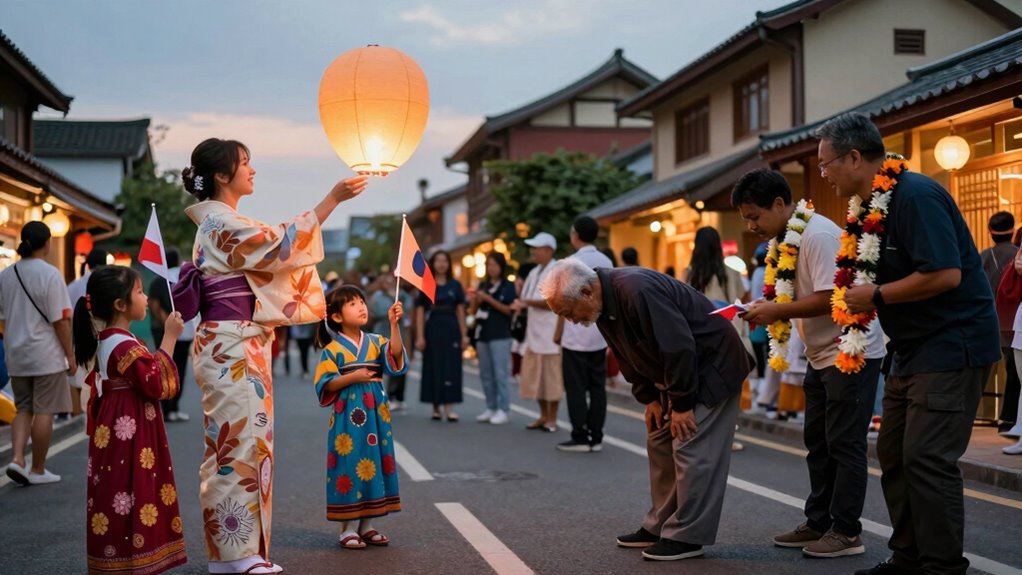

Across cultures, farewell message traditions reveal what societies cherish most. In Japan, bowing shows humility, while Western countries favor handshakes or hugs for warmth. In India, blessings add spiritual meaning, and Chinese farewells emphasize ongoing connections. Many cultures incorporate proverbs, blessings, or gestures that reflect values like respect, community, or hope. Exploring these customs helps you understand deeper social bonds and symbols. Keep exploring to discover more about how farewells shape cultural identities.

Get the little things that make your day delivered free — and shop member deals
- Fast, free delivery on millions of items
- Access to Prime Big Deal Days deals on October 6–7
- Prime Video, Amazon Music and more included
Key Takeaways
- Farewell expressions vary widely, reflecting cultural values like respect, kinship, and social hierarchy.
- Gestures such as bowing, handshakes, or hugs symbolize respect, friendliness, or emotional bonds across cultures.
- Many cultures incorporate blessings or spiritual phrases to convey good wishes and collective well-being.
- Rituals and traditional acts elevate simple goodbyes into meaningful cultural or spiritual ceremonies.
- Farewell customs serve as cultural symbols that reinforce societal identity, community ties, and shared values.

When saying goodbye, different cultures around the world have developed unique traditions for sharing farewell messages that reflect their values and social norms. These customs often go beyond simple words, embodying cultural symbolism that conveys respect, affection, or well-wishes. For example, in some societies, a farewell gesture or phrase holds profound significance, symbolizing hopes for safety, prosperity, or eternal bonds. You might notice that in Japan, bowing during a farewell isn’t just a gesture—it’s a sign of humility and respect rooted in centuries of cultural symbolism. In contrast, in Western cultures, a firm handshake or a warm hug often signifies friendliness and goodwill, emphasizing personal connection.
Linguistic variations also play a crucial role in farewell traditions. The words you choose can carry different connotations depending on the language and context. For instance, in Spanish-speaking countries, saying “¡Hasta luego!” (See you later) is casual and friendly, suggesting ongoing connection. Meanwhile, in Chinese, a farewell like “再见” (zàijiàn) is straightforward but also embodies a hope to meet again, reflecting cultural emphasis on relationships and continuity. You’ll find that some cultures have multiple ways to say goodbye, each suited to specific situations—formal, informal, or spiritual. These variations aren’t just linguistic but reflect social hierarchies, emotional bonds, and communal values.
Farewell words reflect social roles, emotional bonds, and cultural values beyond mere language.
In many Asian cultures, farewell messages often include blessings or good wishes embedded in the language, highlighting the importance of collective well-being. For example, in India, people might say “अलविदा” (Alvida), which carries a sense of finality, but often with added blessings or prayers for the recipient’s safety. In Middle Eastern cultures, farewells might involve heartfelt expressions of hospitality and hope for reunion, emphasizing the importance of community and kinship. These expressions are more than words; they’re a reflection of the society’s core values. Additionally, cultural expressions often incorporate specific phrases or gestures that reinforce social bonds and shared identity.
You’ll also notice that in some cultures, farewell messages are deeply tied to spiritual beliefs and symbolism. For example, certain African communities incorporate proverbs or blessings that invoke protection or divine favor, turning a simple goodbye into a meaningful ritual. These traditions demonstrate how farewell messages serve as a cultural mirror, revealing what a society holds dear—whether it’s respect, hope, spiritual connection, or social harmony. Cultural symbolism plays a vital role in shaping these expressive customs, enriching the act of saying farewell. So, next time you say goodbye, think about how your words and gestures are part of a broader cultural story, rich with symbolism and linguistic nuance.
cultural farewell greeting cards
As an affiliate, we earn on qualifying purchases.
As an affiliate, we earn on qualifying purchases.
Frequently Asked Questions
How Do Farewell Messages Differ in Formal Versus Informal Settings?
In formal settings, you use respectful language, emphasizing professionalism and often incorporating cultural nuances or language variations to show respect. Informal farewells are more relaxed, personal, and casual, reflecting close relationships. You might use humor or affectionate terms, with less concern for cultural nuances. Your tone and word choice adapt based on the context, ensuring your farewell message resonates appropriately, whether respecting traditions or expressing warmth and familiarity.
Are There Specific Farewell Message Customs for Different Age Groups?
Yes, you’ll notice age-specific expressions in farewell messages, reflecting generational etiquette. Younger people often use casual phrases like “See you later,” while older generations might prefer more formal closings such as “Best wishes” or “Kind regards.” These customs help convey respect and familiarity appropriately. Tailoring your farewell message based on age shows you understand and respect different communication styles, making your goodbye more meaningful and culturally sensitive.
How Have Digital Communication Platforms Changed Farewell Message Traditions?
Digital communication platforms have transformed farewell message traditions by enabling virtual goodbyes, making goodbyes more immediate and accessible. You now express cultural expressions through emojis, gifs, and personalized messages that reflect your customs. These platforms allow you to maintain connections across distances, blending traditional farewell sentiments with modern digital flair. As a result, farewell messages become more dynamic, diverse, and personalized, shaping new ways to say goodbye across cultures worldwide.
What Are Common Mistakes to Avoid in Farewell Messages Across Cultures?
Think of farewell messages as delicate bridges that connect hearts across cultures. To avoid stumbling, respect cultural sensitivities and be mindful of language barriers. Steer clear of overly personal comments or humor that might not translate well, and avoid assumptions about shared beliefs. Keep your message inclusive, sincere, and simple. By doing so, you guarantee your farewell resonates positively, strengthening relationships rather than risking misunderstandings.
Do Farewell Message Traditions Vary Between Rural and Urban Communities?
Yes, farewell message traditions often differ between rural and urban communities. In rural areas, cultural rituals and emotional expressions tend to be more traditional and heartfelt, emphasizing community bonds and personal connections. Urban communities might adopt more modern or informal farewell messages, often focusing on individual achievements. These differences reflect the community’s values, with rural areas emphasizing collective sentiment and urban areas embracing diverse, sometimes more casual, expressions.
traditional farewell gesture accessories
As an affiliate, we earn on qualifying purchases.
As an affiliate, we earn on qualifying purchases.
Conclusion
As you’ve seen, farewell message traditions mirror the unique values and histories of each culture, from handwritten notes to digital emojis. Embrace these diverse expressions, for they remind us that even in a world racing towards the future, some customs—like slipping a note into a bottle—stand the test of time. Remember, whether in the age of knights or satellites, a heartfelt farewell always leaves a lasting impression, transcending even the most advanced tech.
spiritual blessing greeting cards
As an affiliate, we earn on qualifying purchases.
As an affiliate, we earn on qualifying purchases.
As an affiliate, we earn on qualifying purchases.
Fall Picks
fall essentials
As an affiliate, we earn on qualifying purchases.