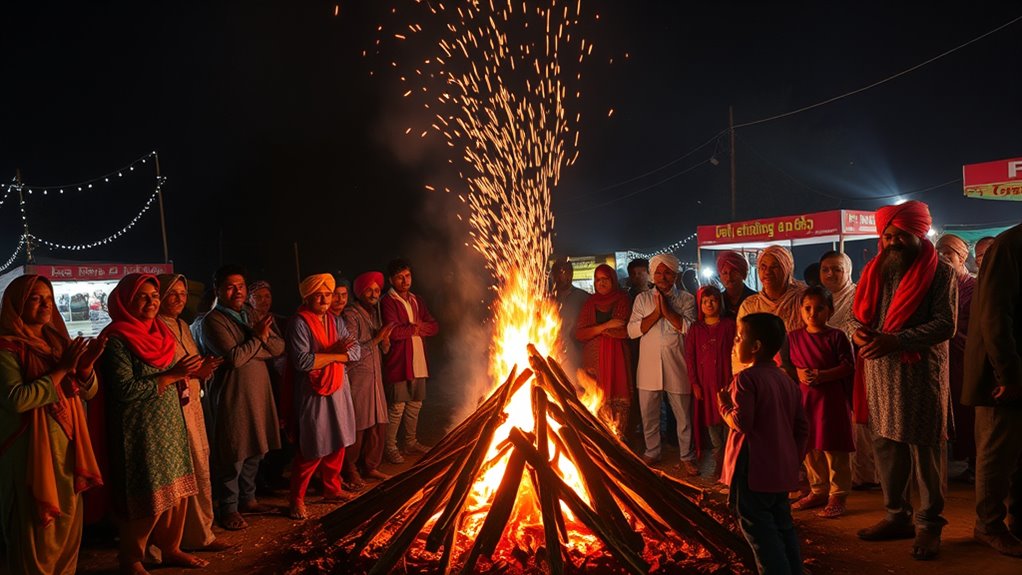

Lohri is a lively Punjabi festival that marks the end of winter and the beginning of longer days through a big community bonfire. You’ll see people singing traditional songs, dancing to energetic dhol rhythms, and offering foods like jaggery and popcorn around the fire. It celebrates the harvest of crops like wheat and sugarcane, emphasizing gratitude and land’s bounty. To discover more about this vibrant festival and its unique traditions, keep exploring its rich cultural significance.
Key Takeaways
- Lohri marks the end of winter and celebrates the harvest of crops like sugarcane, wheat, and maize in Punjab.
- The festival features a central bonfire where communities gather to sing folk songs and dance to traditional music.
- Traditional rituals include offerings to nature and deities, symbolizing gratitude and hopes for future prosperity.
- Celebrations emphasize community bonding through shared food, cultural performances, and children’s dances.
- Lohri preserves Punjabi cultural heritage, reinforcing pride, resilience, and the importance of land and nature.
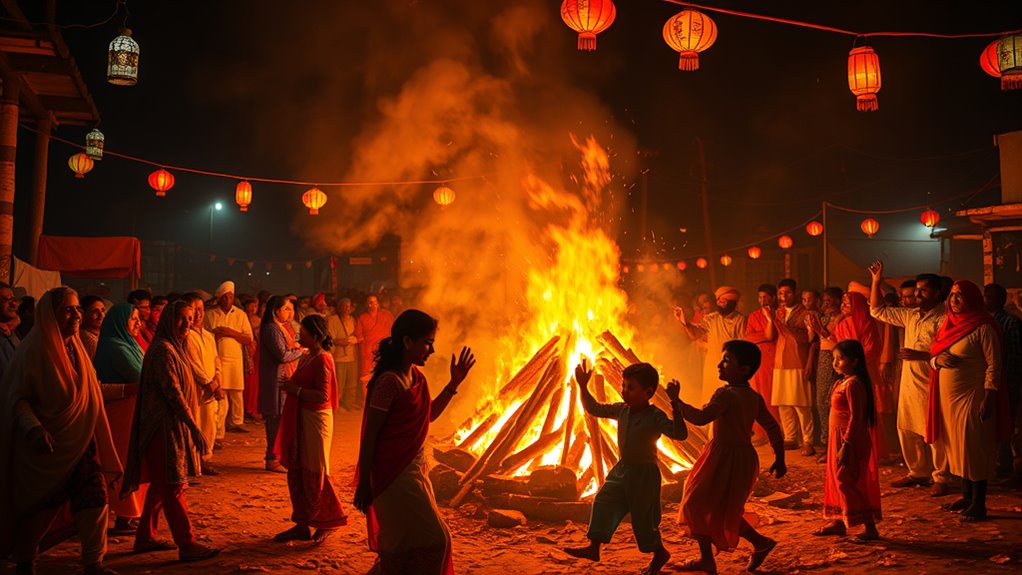
Lohri is a lively Punjabi festival that marks the end of winter and the arrival of longer, sunnier days. As you participate in this joyous celebration, you’ll notice how much it revolves around community, tradition, and the changing seasons. Central to Lohri is the bonfire, which you gather around with friends and family, singing traditional Punjabi music that fuels the festive spirit. The rhythmic beats of dhol drums and catchy folk tunes create an infectious energy, inviting everyone to dance and rejoice. The music isn’t just for entertainment; it carries deep cultural roots, preserving stories, rituals, and the vibrant history of Punjab. These songs often celebrate harvests, seasonal changes, and local deities, making music an essential part of the celebration. You’ll see that Lohri holds significant agricultural importance. As someone immersed in this festival, you recognize how it marks the culmination of the winter crop season, especially the harvesting of sugarcane, wheat, and maize. Farmers consider Lohri a time of gratitude and hope, giving thanks for a successful harvest and praying for prosperity in the months ahead. The bonfire acts as a symbolic offering to nature and the gods, wishing for bountiful crops and the well-being of the community. During this time, you might also witness farmers sharing their produce, showcasing the fruits of their labor, and exchanging blessings. This agricultural significance underscores Lohri’s role as a celebration of hard work, resilience, and the land’s bounty. When you take part in Lohri, you’re not just celebrating with food and dance—you’re connecting with centuries-old traditions that honor nature’s cycles and the farmers who sustain society. The festival’s rituals, songs, and dances reaffirm the collective spirit of Punjab, emphasizing gratitude for the harvest and hope for future prosperity. As you stand around the bonfire, listening to the lively tunes and watching children dance, you’ll feel the deep-rooted cultural pride that ties everyone together. Lohri isn’t just a festival; it’s a heartfelt expression of community, tradition, and the enduring bond between people and the land they cultivate. This vibrant celebration, rich in music and agricultural significance, reminds you of the importance of roots, gratitude, and shared joy in shaping Punjab’s cultural identity. Additionally, the festival helps preserve cultural traditions that have been passed down through generations, strengthening community bonds.
Top picks for "lohri bonfire festival"
Open Amazon search results for this keyword.
As an affiliate, we earn on qualifying purchases.
Frequently Asked Questions
What Are the Traditional Foods Eaten During Lohri?
During Lohri, you enjoy traditional sweets like gajak, tilgul, and rewri, which are made from sesame seeds and jaggery. You also indulge in festive snacks such as popcorn, peanuts, and roasted chestnuts, which add to the celebration’s warmth. These foods symbolize prosperity and good fortune, making your Lohri celebration lively and flavorful. Sharing these treats with loved ones enhances the festive spirit and strengthens community bonds.
How Has Lohri Evolved Over the Years?
You’ll notice Lohri has transformed into a vibrant tapestry, blending tradition with modernity. Today, you might see people donning colorful modern costumes, adding flair to the age-old bonfire. Social media has become a digital stage, where celebrations are shared worldwide in real-time, creating a global community. This evolution keeps Lohri lively and relevant, connecting generations through new expressions while honoring its roots.
Are There Regional Variations in Lohri Celebrations?
Yes, there are regional variations in Lohri celebrations. You’ll notice different customs and cultural variations across Punjab and neighboring states. In some areas, traditional folk dances like Bhangra and Gidda are performed, while others focus on specific regional foods or rituals. These local customs add diversity to the festival, allowing you to experience unique traditions and celebrations depending on where you are, making Lohri a vibrant and varied festival.
What Is the Significance of the Bonfire in Lohri?
You might think the bonfire is just for warmth, but in Lohri, it symbolizes more—symbolic warmth that ignites community bonding. As you gather around the fire, it’s a powerful reminder of unity, tradition, and shared hopes for prosperity. The flames crackle with stories and songs, turning a simple fire into a symbol of collective strength and festive spirit, making it much more than just a cozy burn.
How Do Children Participate in Lohri Festivities?
You participate in Lohri festivities by engaging in children’s games like singing, dancing, and jumping around the bonfire. You also enjoy storytelling traditions, where elders share folk tales and legends, passing cultural knowledge to the younger generation. Kids often perform traditional dances, collect sweets and treats, and partake in singing sessions, creating a lively, joyful atmosphere that celebrates community, harvest, and cultural heritage during this vibrant festival.
Conclusion
As you join in the lively celebrations of Lohri, imagine yourself around the glowing bonfire, feeling the warmth and joy that unite everyone. Picture a farmer celebrating his harvest success, singing and dancing with his community. Lohri isn’t just about fire and food; it’s a vibrant reminder of tradition, gratitude, and togetherness. So, next time you see a Lohri bonfire, remember you’re witnessing a heartfelt expression of Punjab’s rich cultural spirit.