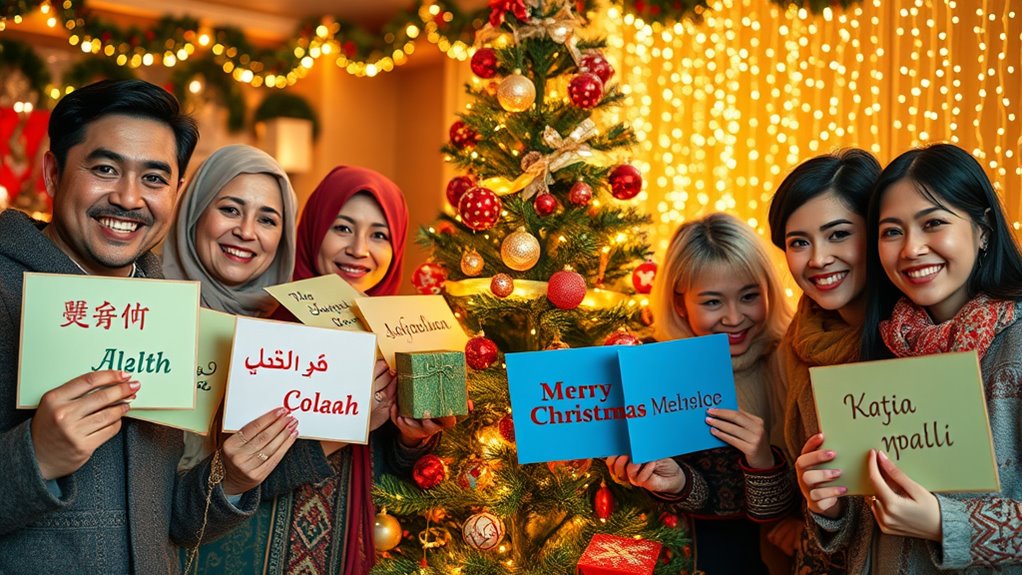

To say “Merry Christmas” in different languages, you can greet friends worldwide with phrases like “Feliz Navidad” in Spanish, “Frohe Weihnachten” in German, or “Buon Natale” in Italian. Other options include “Joyeux Noël” in French, “God Jul” in Norwegian, and “Mele Kalikimaka” in Hawaiian. Using these greetings shows respect and spreads holiday cheer across cultures. Keep exploring, and you’ll discover even more meaningful ways to share festive wishes everywhere.
Key Takeaways
- Learn common Christmas greetings in various languages to foster cultural understanding and global connection.
- Recognize how different countries say “Merry Christmas” to appreciate diverse traditions and customs.
- Use native greetings to show respect and genuine interest during international holiday celebrations.
- Understand the cultural significance behind each greeting, reflecting unique holiday traditions worldwide.
- Incorporate multilingual greetings into festivities to enhance the sense of community and shared joy.

Christmas is a time when people around the world come together to celebrate, and sharing greetings in different languages adds a special touch of global unity. It’s an opportunity to embrace diverse holiday traditions and appreciate how various cultures mark this festive season. When you learn how to say “Merry Christmas” in different languages, you connect more deeply with people from diverse backgrounds, strengthening cultural celebrations that transcend borders. Whether you’re exchanging gifts, attending community events, or simply sharing a smile, greeting others in their native language shows respect and genuine interest in their customs.
Each country has its own unique way of celebrating Christmas, often rooted in rich traditions passed down through generations. For example, in Spain, you might hear “Feliz Navidad,” a warm phrase that echoes through lively street parties and family gatherings. In Germany, “Frohe Weihnachten” is spoken with pride during cozy family dinners and festive markets. These greetings are more than words; they carry the spirit of holiday traditions that define each culture‘s approach to the season. In Latin America, “Feliz Navidad” is often accompanied by lively music, dance, and vibrant decorations, reflecting cultural celebrations that are as colorful as they are meaningful.
Learning these phrases also helps you understand the deeper significance behind each tradition. In some cultures, Christmas involves religious ceremonies, while others focus on communal festivities and gift exchanges. For instance, in the Philippines, Christmas is celebrated with grand parades and lantern festivals, emphasizing community and hope. In Scandinavian countries, Christmas revolves around cozy gatherings called “hygge,” where warmth, comfort, and togetherness take center stage. Additionally, understanding the cultural context of these greetings can enhance your appreciation for astrological or cultural influences on holiday customs, enriching your overall holiday experience. When you say “Merry Christmas” in a local language, you’re acknowledging these cultural nuances and honoring the unique ways people celebrate this holiday.
Frequently Asked Questions
How Do Christmas Greetings Vary in Non-Christian Cultures?
In non-Christian cultures, Christmas greetings often vary due to cultural variations and greeting customs. You might notice that some use neutral phrases like “Happy Holidays” or regional expressions that emphasize well-wishes rather than religious sentiments. Others may not celebrate Christmas at all, so greetings focus on general goodwill. When engaging with diverse traditions, you adapt your greetings to respect local customs, showing understanding and appreciation for their unique cultural variations.
Are There Specific Gestures Associated With Christmas Greetings Worldwide?
You’re right on the mark to wonder about gestures; they often speak louder than words. Around the world, festive handshakes and seasonal wave gestures are common ways to greet during Christmas. For example, some regions prefer a warm hug, while others use a quick wave or a gentle nod. These gestures add a personal touch, making your holiday greetings more meaningful and culturally respectful. Remember, a friendly gesture transcends language barriers!
How Do Pronunciation Differences Affect Christmas Greetings in Various Languages?
Pronunciation differences substantially impact Christmas greetings across languages. You might face pronunciation challenges due to dialect variations, making it tricky to say greetings correctly. Dialect differences can change sounds or intonation, so you may need to practice or listen closely to native speakers. By paying attention to these variations, you guarantee your greeting is understood and appreciated, helping you connect more genuinely with people from different linguistic backgrounds during the holiday season.
What Are the Origins of Common Christmas Greetings in Different Countries?
You learn that the origins of common Christmas greetings stem from historical influences and linguistic evolution. For example, “Merry Christmas” in English traces back to 16th-century traditions, while “Feliz Navidad” in Spanish combines religious roots with regional language development. Many greetings evolved through cultural exchanges, religious practices, and colonization, shaping how people express holiday joy today. Understanding these origins helps you appreciate the rich diversity behind each festive greeting.
How Are Christmas Greetings Adapted for Non-Binary or Inclusive Language?
You can adapt Christmas greetings for non-binary or inclusive language by choosing gender-neutral phrases like “Happy Holidays” or “Wishing you joy this festive season.” Use inclusive language by avoiding gender-specific terms such as “merry gentlemen” or “ladies and gentlemen.” You might also opt for phrases like “Season’s Greetings” or “Warm wishes to everyone,” ensuring your greetings are welcoming and respectful to all, regardless of gender identity.
Conclusion
No matter where you are, spreading seasonal spirit starts with simple words. By embracing diverse languages, you demonstrate genuine goodwill and global gratitude. Remember, small gestures speak volumes, showcasing your sincerity and spark. So, share smiles, send sentiments, and celebrate connections. Let your kindness cross continents, creating a cycle of compassion, cheer, and cheerfulness. Because during Christmas, true togetherness transforms traditions into treasured timeless ties.